
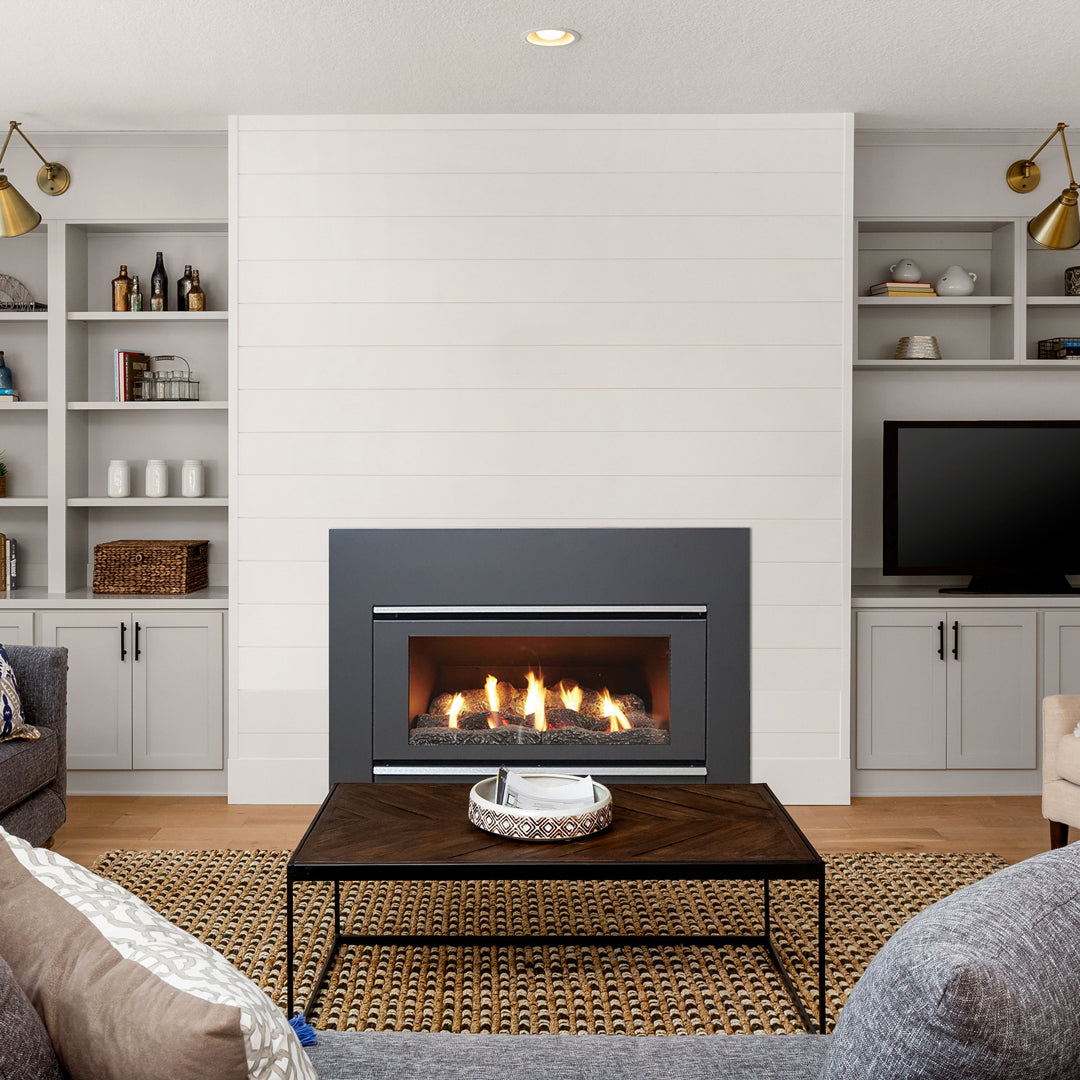
You're mid-renovation, the living room is finally coming together, and a gas log fireplace keeps coming up as the centrepiece. The showroom photos look great. Before you commit the money, you want a straight answer. Is a gas log fireplace worth it, or are you paying for a good-looking flame you'll barely use?
For most homes, a gas log fireplace is worth it when you want instant, controllable heat and a real flame in the room you use most. It works as a focal point that also warms the space, with no wood to store and no ash to clean. It makes less sense if you rarely use that room, or if your home has no gas connection and no appetite for bottled gas. Illusion Fires is Australia's largest gas log fireplace manufacturer, building its gas log fires in Melbourne and selling them factory-direct. Here is the honest case, for and against, so you can decide before you spend.
Are gas log fireplaces worth it?
Whether a gas log fireplace is worth it comes down to three things: how much you will use it, your gas situation, and the room you are heating.
- How much you will use it. A gas log fire earns its keep across a cold Melbourne or Ballarat winter, where the main living room needs real heat for months. If you would light it twice a year, the spend is harder to justify.
- Your gas situation. A gas log fire needs natural gas or LPG (bottled gas, common in regional areas without mains gas). If you have mains gas at the meter, you are most of the way there. If you do not, the picture changes.
- The room. A gas log fire heats the room it sits in, not the whole house. It suits a living, family or open-plan space where you spend your evenings.
Get those three right and a gas log fireplace is one of the most satisfying heating upgrades you can make. Get them wrong and it becomes an expensive ornament. The rest of this article is the working behind that verdict.
What you get from a gas log fireplace
The benefits of a gas log fireplace go beyond its looks. Here is what you are paying for.
- Instant heat at the press of a button. No kindling, no waiting. You turn it on with a remote or a wall switch and the room starts warming straight away.
- No wood, no ash, no mess. Nothing to chop, carry or store. Nothing to sweep out the next morning.
- Controllable, consistent warmth. You set the heat and the flame height and leave it. The room holds the temperature you chose, instead of a fire that flares then fades.
- A real flame as the centrepiece. A gas log fire gives you a genuine flame, not a screen. It anchors the room and pulls the furniture around it.
- Heat where you live. It warms the room you use rather than pushing warm air through the whole house. That is efficient zone heating.
It also comes in inbuilt and freestanding versions, so it fits a new cavity, an existing masonry opening, or stands as a feature on its own without a major rebuild.
Illusion gas log fires run on a balanced flue, which means they draw air for the flame from outside and send the exhaust back outside through a sealed system. The glass front stays sealed, so the burning happens away from the air in your room.
The honest drawbacks of a gas log fireplace
No heater suits every home. These are the real disadvantages of a gas log fireplace, and they matter as much as the benefits.
- You need a gas connection. Mains natural gas is the cheap, simple option. On LPG the running cost is higher, so factor that in before you commit. If there is no gas at the property at all, running a new line adds cost and may not be possible.
- Installation is an upfront, fixed cost. A gas log fire must be installed by a licensed gasfitter. There is flue work involved, and the price is quoted per site, because every wall and flue run is different.
- It heats a zone, not a whole house. If you want one appliance to warm every room, a gas log fire is the wrong tool. It is built to heat the space it sits in.
- Gas supply and pricing are worth a thought. Gas prices move, and the rules around new gas connections are changing in Victoria. For an existing home with gas already connected, this is rarely a problem. We cover it properly in the questions below.
This is the part most manufacturer pages skip. A gas log fireplace is a great fit for the right home and the wrong call for others. Knowing which one you are saves you money.
What does a gas log fireplace cost to buy and run?
Two numbers matter: what you pay once, and what you pay each hour.
The upfront cost is the unit plus professional installation. Buying factory-direct from a manufacturer like Illusion cuts out the reseller margin, so the unit price can be sharper than a showroom that on-sells someone else's brand. Installation is quoted per site, because the flue run and the wall it goes into change the work involved.
Running cost is modest. In Victoria, a gas log fire costs roughly $0.70 to $1.40 an hour, depending on the model's output and the flame setting. On LPG the hourly cost runs higher. Worth knowing: running a gas fire does not add a new supply charge to your bill. The daily supply charge applies to your gas connection either way, so you only pay for the gas you burn. For the full breakdown, see our guide to gas fireplace running costs.
Gas, electric or wood: which is worth it for you?
Worth it depends partly on what you are comparing it against. Here is the short version.
- Gas suits a main living area where you want instant, controllable primary heat and a real flame. It is the strongest all-rounder for the room you live in.
- Electric suits a smaller space, an apartment, or a room with no gas. Illusion's Velisse Aura electric range gives you the flame and ambience with a simple plug-in or hardwired install.
- Wood suits people who want self-sufficiency and raw heat output, and do not mind the work of loading and cleaning. That is our sister brand, Ultimate Fires.
For the detail, we have compared gas log fireplaces and electric fireplaces side by side, and weighed a gas fireplace against reverse cycle on running cost.
Who a gas log fireplace suits, and who it doesn't
This is the decision in plain terms.
A gas log fireplace is worth it for renovators heating a main living zone, because you are already opening up the room and the flue and wall work fit the build. It is worth it for homes on natural gas that want low-effort heat, with instant warmth and no daily upkeep. And it is worth it for anyone who wants a real flame the room is built around.
It is less worth it for homes with no gas and no appetite for LPG, where an electric fireplace is usually the better answer. It is less worth it for people who want whole-home heating from one unit, which is a job for ducted heating or reverse cycle. And it is hard to justify for a rarely used room, like a guest room you heat twice a year.
Many older Victorian homes already have a gas connection in place, which makes a gas log fire an easy upgrade. Newer estates are a different story, which brings us to the questions buyers ask most.
Common questions about gas log fireplaces
Are gas log fires expensive to run?
No. In Victoria a gas log fire runs at roughly $0.70 to $1.40 an hour on mains gas, depending on the model and the setting. That is a modest cost for heating the room you spend your evenings in. LPG runs higher. Our running cost guide breaks down the numbers.
Are gas log fireplaces good for heating?
Yes, for the room they sit in. A gas log fire produces strong radiant heat you can feel from across the couch, and a typical unit puts out far more heat than a plug-in electric fireplace. It is built for zone heating, not whole-home heating.
Do gas log fires add value to a home?
A well-chosen fireplace can be a genuine selling feature, especially as the focal point of the main living room. Buyers respond to a room that feels finished and warm. It is one factor among many, not a guaranteed dollar figure, so treat it as a bonus rather than the main reason to buy.
Are gas fireplaces being phased out in Australia?
Not for existing homes. Under the Victorian Government's Gas Substitution Roadmap, new homes that need a planning permit have had to be all-electric since 1 January 2024, and from 2027 that requirement broadens to most new builds. Existing homes are not affected. You can keep, repair and install gas appliances, and LPG is not covered by the changes. Since most gas log fires go into existing homes with gas already connected, the common case is unaffected. If you are building new, check your gas options with your builder or council early.
Is a gas log fire better than a wood fire?
Neither is better outright. A gas log fire wins on convenience, with instant on and off, no wood, no ash and no flue cleaning. A wood heater wins on raw output and self-sufficiency if you have access to firewood. If a real wood fire is what you are after, our sister brand Ultimate Fires covers it.
What to do next
The honest test for any gas log fireplace is whether the flame looks right and the heat suits the room. That is hard to judge from a photo.
The next step is to see one running. Illusion Fires has showrooms across Victoria, South Australia, Western Australia and New South Wales, where you can stand in front of the flame, compare inbuilt and freestanding models, and work through your gas situation with a consultant who knows the range. Bring the size of your room and a photo of the wall you have in mind, and you will have a clear answer on whether a gas log fireplace is worth it for your home.

Leave a comment
This site is protected by hCaptcha and the hCaptcha Privacy Policy and Terms of Service apply.