
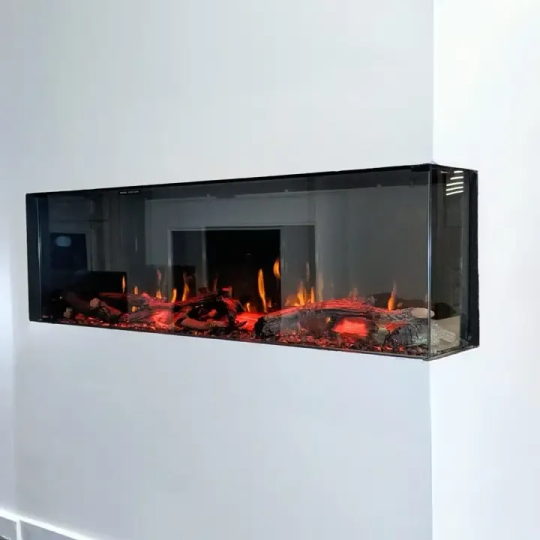
Some apartments can have fireplaces, but the answer depends on the building, the wall, the services, and the owners corporation rules. An apartment fireplace is rarely a product-only decision. It is also a building approval, trade access, power, gas, flue, and common property question.
Electric fireplaces are usually the easiest option to plan in an apartment because they do not need a gas line, flue, or combustion air. Gas fireplaces may still work in some apartment buildings, but they need earlier technical checks because flueing, gas supply, ventilation, and external penetrations can involve common property.
Illusion Fires manufactures gas log fireplaces in Melbourne and supplies the Velisse Aura electric fireplace range, so both options can be compared honestly. The right choice comes down to the apartment, the wall, the installation method, and what your owners corporation will allow.
Can you install a fireplace in an apartment?
You may be able to install a fireplace in an apartment, but the decision depends on more than the space inside your lot. In Victoria, many apartment owners still use the words body corporate or strata, but the formal term is owners corporation.
Apartment ownership usually separates the private lot from common property. Your apartment may be privately owned, while the walls, slabs, risers, roofs, facades, balconies, shafts, lifts, foyers, and shared services may fall under owners corporation control.
That distinction matters because a fireplace plan can involve:
- electrical work
- gas work
- flueing
- cabinetry
- wall lining
- heat clearances
- ventilation
- delivery access
- drilling or penetrations
- fire safety requirements
Do not assume a product avoids approval because it looks decorative, slim, or portable. A wall-mounted electric fireplace, built-in feature wall, hardwired unit, or gas fireplace in an apartment can still trigger checks if the work affects a shared wall, common service, external appearance, or building safety.
Why electric fireplaces are usually simpler in apartments
An electric fireplace is usually simpler in an apartment because it does not burn gas and does not need a flue. That removes two of the main issues that make fireplace planning harder in multi-storey buildings.
A Velisse Aura electric fireplace can suit apartment living rooms where the goal is a visual centrepiece, supplementary warmth, and a cleaner wall design. It can often be planned into a mantel suite, media wall, or feature wall with less disruption than a gas installation.
That does not mean every electric fireplace can be installed without approval. New power points, hardwiring, wall mounting, cabinetry, combustible finishes, shared walls, and building rules still need to be checked. A licensed electrician should assess the power supply where electrical work is needed.
| Factor | Electric fireplace | Gas log fireplace |
|---|---|---|
| Flue | Usually no | Usually yes |
| Gas line | No | Yes |
| Common property impact | Often lower | Often higher |
| Heat output | Usually room or ambience support | Usually stronger heating |
| Approval complexity | Building-specific, often simpler | Building-specific, often more complex |
The key advantage of an electric fireplace in an apartment is planning flexibility. It can usually be designed around the room first, then checked against power, wall structure, clearances, and manufacturer requirements.
When a gas fireplace may be difficult in an apartment
A gas fireplace in an apartment may be possible, but it usually needs earlier checks than an electric option. The issue is rarely the fireplace alone. The hard part is often getting gas, air, and exhaust paths to work safely inside a shared building.
A gas apartment fireplace plan needs to consider:
- Flue route: The flue may need to pass through a wall, roof space, riser, or external facade.
- Gas supply: The apartment needs a suitable gas supply, isolation, and safe pipework.
- External penetrations: Any wall, balcony, roof, or facade penetration may involve common property.
- Ventilation: The exact appliance and building layout affect ventilation requirements.
- Heat clearances: Cabinetry, mantels, shelves, TVs, and wall linings must suit the fireplace.
- Trade access: A multi-storey building may restrict lifts, working hours, waste removal, and noisy works.
- Installation standards: Gas installation work must follow AS/NZS 5601.1:2022 and the model-specific installation manual.
A licensed gasfitter or fireplace installer should assess the gas and flue route before a wall is designed. In many apartments, the gas fireplace question should be answered before cabinetry drawings, TV placement, or stonework are locked in.
What owners corporation approval usually turns on
Owners corporation approval usually turns on whether the work affects common property, shared services, fire safety, structure, or the appearance of the building. It may also depend on the plan of subdivision, building rules, model rules, and any special rules adopted by the owners corporation.
Approval may become more important when the work:
- penetrates walls, ceilings, slabs, balconies, roof spaces, or service zones
- changes the external facade or building appearance
- affects fire safety, smoke paths, ventilation, drainage, or acoustic separation
- touches shared services or service risers
- changes structural elements
- needs a building or planning permit
- affects trade access, noisy works, waste removal, or common area protection
Some internal renovation work may be straightforward. Other work may need owners corporation approval, a building surveyor, council input, or written confirmation before ordering. The safest starting point is to check early, not after the fireplace wall has been designed.
| Check | Why it matters | Who to ask |
|---|---|---|
| Lot boundary | Shows what is private and what may be common property | Owners corporation manager or plan of subdivision |
| Wall type | Affects mounting, clearances, framing, and hidden services | Builder or installer |
| Power supply | Electric fireplaces need suitable power | Licensed electrician |
| Gas and flue route | Gas fireplaces need safe supply and discharge | Licensed gasfitter or fireplace installer |
| Approvals | Helps avoid delays, redesigns, or removal orders | Owners corporation manager, council, or building surveyor where relevant |
Approval questions should be handled in writing where possible. A verbal "it should be fine" is not enough if the work later affects common property or breaches building rules.
What to check before choosing the fireplace
The best apartment fireplace choice is the one that fits the building before it fits the brochure image. Start with the wall, services, and approval pathway.
- Wall depth and structure: A shallow feature wall may suit an electric fireplace. A deeper cavity may be needed for some inbuilt designs. The wall must also handle the load and fixing method.
- Power point location: An electric fireplace needs suitable power. If a new power point or hardwired connection is needed, plan it before the wall lining goes in.
- Existing gas supply: A gas fireplace needs a suitable gas path. Do not assume gas cooking or hot water means the fireplace can be added easily.
- Flue path: Gas fireplaces usually need a safe flue route. In apartments, the flue route can be the biggest approval issue.
- TV and cabinetry plans: Heat, height, wiring, ventilation openings, and clearances should be planned together.
- Heat clearances: The exact fireplace model controls clearance requirements around mantels, shelves, wall linings, and joinery.
- Access for trades: Some apartment buildings limit trade hours, lift use, parking, loading zones, and waste movement.
- Lift, stair, and delivery limits: Measure access paths before ordering a large unit, mantel suite, stone panel, or long wall component.
- Rules for drilling and noisy works: Owners corporation rules may limit when drilling, cutting, or demolition can happen.
- Insurance and warranty conditions: Product warranty, installation warranty, building insurance, and owners corporation insurance may all require correct approval and trade documentation.
A fireplace wall is harder to change once framing, power, cabling, and finishes are complete. The early checks feel slow, but they are cheaper than rebuilding the wall later.
How to plan an apartment fireplace wall
An apartment fireplace wall should be planned around scale, wall depth, power, heat, and viewing height. A good design can make a compact apartment living area feel settled without making the room feel smaller.
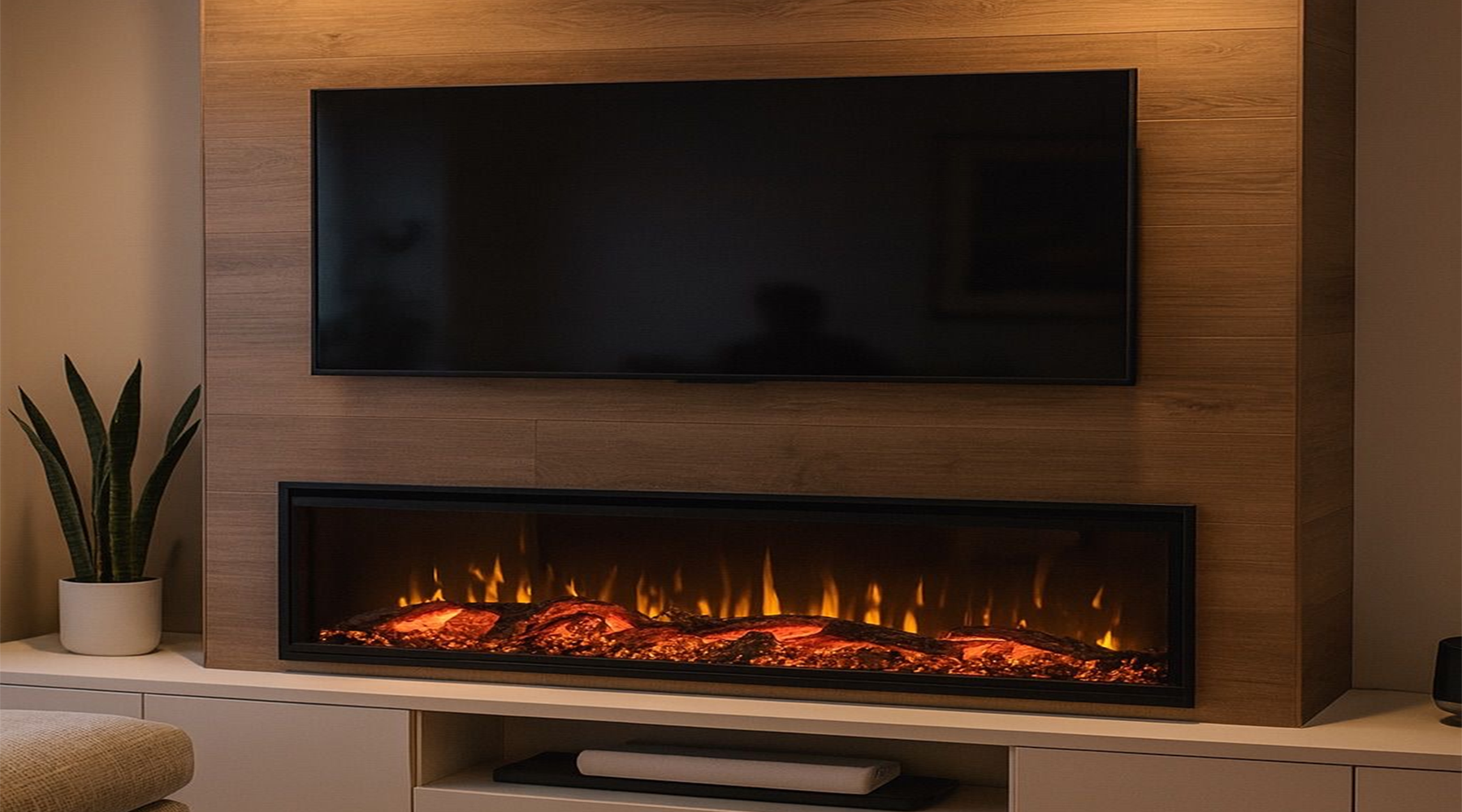
For many apartments, an electric mantel suite or slim feature wall is the lower-disruption option. It can create the look of a fireplace centrepiece without needing a flue path or gas line. The wall still needs enough depth for the chosen unit, safe fixing, power access, and any required airflow.
When planning the wall, check these design points before ordering:
- Fireplace scale: A large flame effect can overpower a small apartment living room. Match the fireplace width to the wall and seating distance.
- Feature wall depth: Deeper walls can look substantial, but they take floor space. In narrow rooms, a slimmer surround may work better.
- TV position: A TV above a fireplace can work in some designs, but viewing height, heat, cabling, and wall structure must be planned together.
- Cable management: Power, TV cabling, soundbar cabling, and smart controls should not be added as an afterthought.
- Ventilation openings: Do not block any ventilation or service access required by the fireplace, building, or product manual.
- Wall lining and finishes: Plasterboard, stone, tiles, timber-look panels, and cabinetry all need to suit the heat and installation requirements.
- Room balance: A fireplace should anchor the room without taking over storage, walkway space, or natural light.
In small apartments, restraint often works better than building a heavy wall. A fireplace can be the visual centre of the room without needing oversized shelving, thick side columns, or a full-height stone surround.
What to ask before ordering
Before ordering an apartment fireplace, get the approval and trade questions out of the way. The right questions can prevent a good design from failing at installation.
Use this checklist before placing an order:
- Does my owners corporation need to approve this work?
- Is the wall part of my lot, common property, or a shared boundary?
- Will the work affect a shared wall, balcony, riser, roof, or external facade?
- Is the fireplace plug-in or hardwired?
- Where will the power point go?
- Does the circuit suit the fireplace and any other media wall equipment?
- If gas, where will the flue discharge?
- Is there a safe and approved gas route?
- Are there any fire safety, acoustic, ventilation, or structural conditions?
- Will the installation affect building insurance or owners corporation insurance?
- Can trades access the apartment, lift, loading zone, and common areas?
- Can the fireplace be installed without voiding the product warranty?
A showroom conversation is more useful when these questions have at least been started. You do not need every answer on day one, but you do need to know which answers control the design.
Talk to a showroom before committing to the wall
Bring the apartment plans, owners corporation rules, wall photos, measurements, and any notes about power or gas access to a showroom conversation before committing to the wall design.
Our Melbourne-made gas log fireplace range and Velisse Aura electric fireplaces suit different homes for different reasons. In an apartment, the right answer may be an electric fireplace with a mantel suite, a slim feature wall, or a gas fireplace only where the building can support the gas and flue requirements.
A showroom visit can help you compare flame effect, heat output, wall depth, mantel options, and the practical installation path before trades start cutting into the wall.
FAQ
Can I install an electric fireplace in an apartment without approval?
Sometimes simple internal work may be easier to approve, but do not assume approval is never needed. Hardwiring, wall mounting, cabinetry, shared walls, common property, and building rules may still trigger checks.
Can a gas log fireplace go in an apartment?
A gas log fireplace can go in some apartments, but gas supply, flue route, ventilation, clearances, and owners corporation approval need to be assessed early. Multi-storey buildings often make the flue and external discharge path more complex.
Is an electric fireplace enough to heat an apartment living room?
It depends on the room size, insulation, ceiling height, and the fireplace model. Electric fireplaces often suit ambience and supplementary warmth. Gas fireplaces usually provide stronger heating where the building can support the installation.
Can I put a TV above an apartment fireplace?
A TV can be placed above some apartment fireplaces, but heat, viewing height, wall structure, cabling, and fireplace clearances need to be planned together. The safest layout depends on the exact fireplace model and wall design.
What should I bring to an Illusion showroom appointment?
Bring an apartment floor plan, photos of the wall, owners corporation rules, rough wall measurements, ceiling height, and any details about power or gas access. If you already have cabinetry, TV, or renovation drawings, bring those too.

Leave a comment
This site is protected by hCaptcha and the hCaptcha Privacy Policy and Terms of Service apply.