
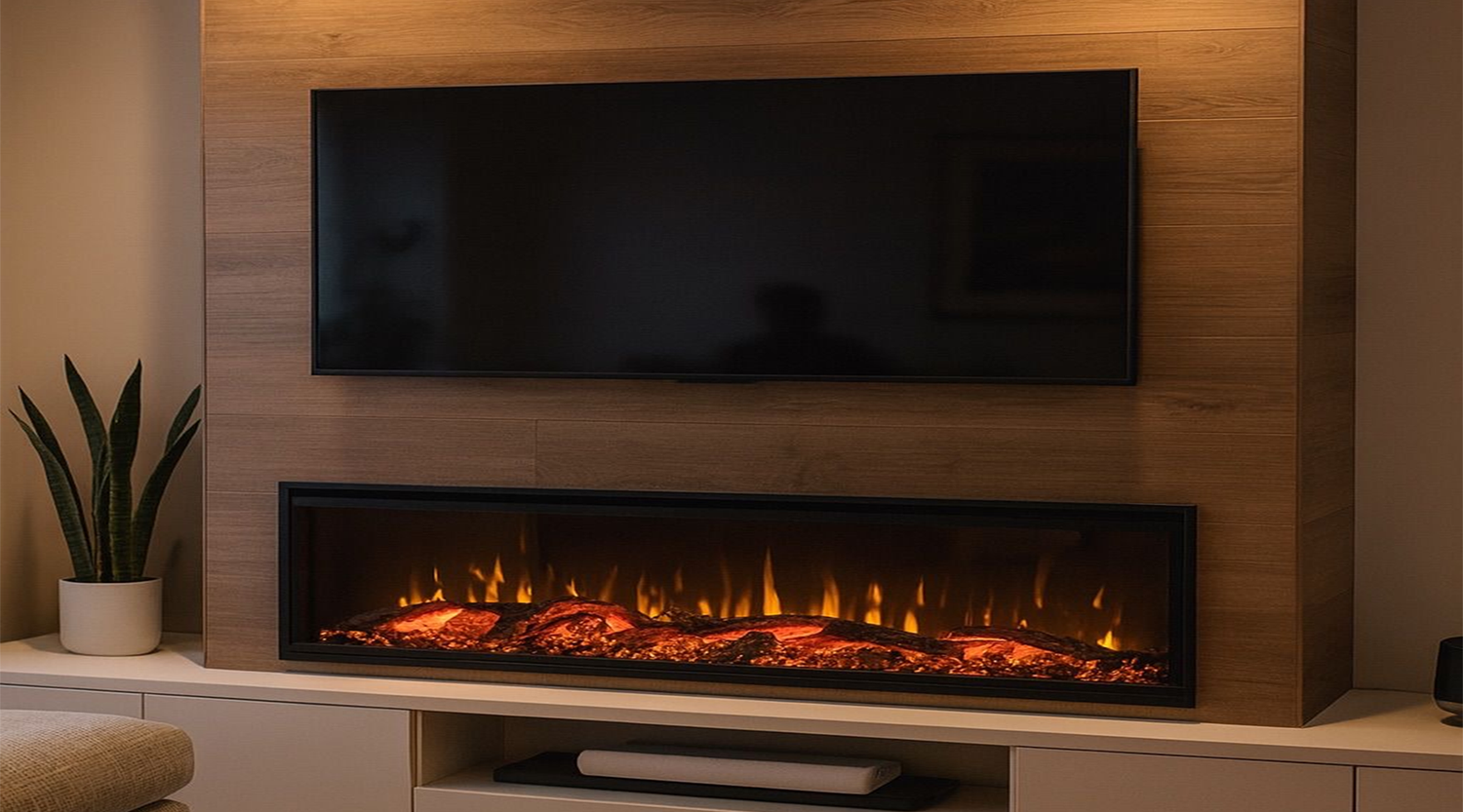
A good electric fireplace mantel suite should match the fireplace size, wall width, room scale, power location, installation method and heat-clearance requirements. For many homes and apartments, an electric fireplace with mantel can give the room a finished, furniture-like focal point without needing a gas line or flue.
Illusion Fires has a Melbourne manufacturing base for its gas log fireplaces and works with the Velisse Aura electric fireplace range. The mantel decision matters because the fireplace has to fit the room as well as the wall. A mantel that is too narrow can look temporary. One that is too deep or wide can make a small living area feel cramped. The best choice starts with measurements, not colour swatches.
What is an electric fireplace mantel suite?
An electric fireplace mantel suite is a surround or furniture-style frame built around an electric fireplace. It gives the fire a more traditional fireplace shape, even when the unit itself is electric.
Depending on the product, a mantel suite may be freestanding, fixed to the wall or built into a wider feature wall. Some sit like furniture against the wall. Others need a framed opening, careful fixing, cable planning and installer checks before they are fitted.
The main appeal is simple: the mantel creates the visual weight of a fireplace without the gas line and flue requirements of a gas log fire. That can make an electric fireplace easier to consider in apartments, townhouses and renovations where gas flueing is difficult.
That does not mean every installation is simple. The fireplace still needs correct power, ventilation, clearances, safe fixing and product-specific installation. If a new power point, concealed cable route or hardwired connection is needed, use a licensed electrician.
How wide should an electric fireplace with mantel be?
The width of an electric fireplace with mantel should suit the fireplace, the wall and the furniture around it. A mantel should look intentional, not like a loose frame placed around an appliance.
The fireplace is usually the starting point. A mantel that is only slightly wider than the fire can work in a compact room, but it may look too thin on a broad wall. A wider surround or feature wall can suit an open-plan room, but the same approach may overpower a small apartment lounge.
Measure the whole wall before choosing the mantel. Curtains, windows, skirting boards, door swings, cabinetry, walking paths and furniture all reduce the usable space.
| Room situation | Better mantel approach | Why it works |
|---|---|---|
| Small apartment living room | Slim, low-depth mantel suite | Keeps floor space and avoids blocking the furniture layout |
| Standard lounge wall | Balanced mantel slightly wider than the fireplace | Gives the fireplace a clear centre without overbuilding |
| Open-plan room | Wider feature wall or mantel suite | Gives the fireplace enough visual weight in a larger space |
| TV wall | Lower, wider composition | Helps manage viewing height and cable routing |
A simple test is to stand back from the wall and imagine the fireplace as part of the furniture layout. If the mantel leaves awkward gaps either side, it may be too small. If it pushes furniture out of place, blocks curtains or crowds a walkway, it is too large for the room.
How deep should the mantel suite be?
Mantel depth affects how far the fireplace projects into the room. Electric fireplaces often need less depth than gas fireplaces, but the exact fireplace model still controls the cavity, ventilation and installation method.
Depth matters most in compact rooms. A mantel that looks modest in a showroom can feel bulky in a narrow lounge or apartment living room. Check how far the mantel will sit forward from the wall, then mark that depth on the floor with masking tape. This gives a clearer sense of how much space the fireplace wall will use.
A deeper feature wall can still be the right choice when it has a purpose. It can hide power points, cable runs, TV wiring and wall brackets. It can also give the fireplace more architectural weight in a larger room.
A mantel shelf needs extra care. It may affect TV height, heat movement and the way the fireplace is serviced. Always check the fireplace manual and manufacturer instructions before choosing shelf depth, cavity depth or surrounding materials.
Should the electric fireplace sit under a TV?
An electric fireplace can often sit under a TV, but the layout still needs planning. Heat is usually less complicated than it is with a gas log fire, but viewing height, cable access and wall depth can cause problems.
The biggest mistake is placing the TV too high. A mantel shelf can push the screen above a comfortable viewing position, especially in rooms with lower ceilings. A lower mantel, wider composition or recessed fireplace can help keep the TV in a more usable position.
Plan these details before the wall is built:
- Viewing height: The centre of the TV should suit the seating position. A tall mantel can make the screen uncomfortable to watch.
- Heat path: Check where warm air leaves the electric fireplace. Do not assume the mantel shelf protects the TV.
- Cable route: Decide where power, HDMI cables and antenna points will run before the wall is closed.
- Wall depth: A recessed fireplace, TV bracket and concealed cable route all need enough wall depth.
- Service access: The fireplace and TV should remain accessible for servicing, replacement and warranty checks.
A TV wall should be drawn as one composition. The fireplace, mantel, TV, soundbar, cabinets and power points all need to work together.
Which mantel style suits the room?
The right electric fireplace mantel should suit the age of the home, the furniture scale and the wall finish. Style matters, but proportion matters more.
A traditional mantel profile can suit older homes, especially where the room already has detailed skirting boards, cornices, timber floors or period-style furniture. The mantel should look like it belongs with those details rather than copying them too heavily.
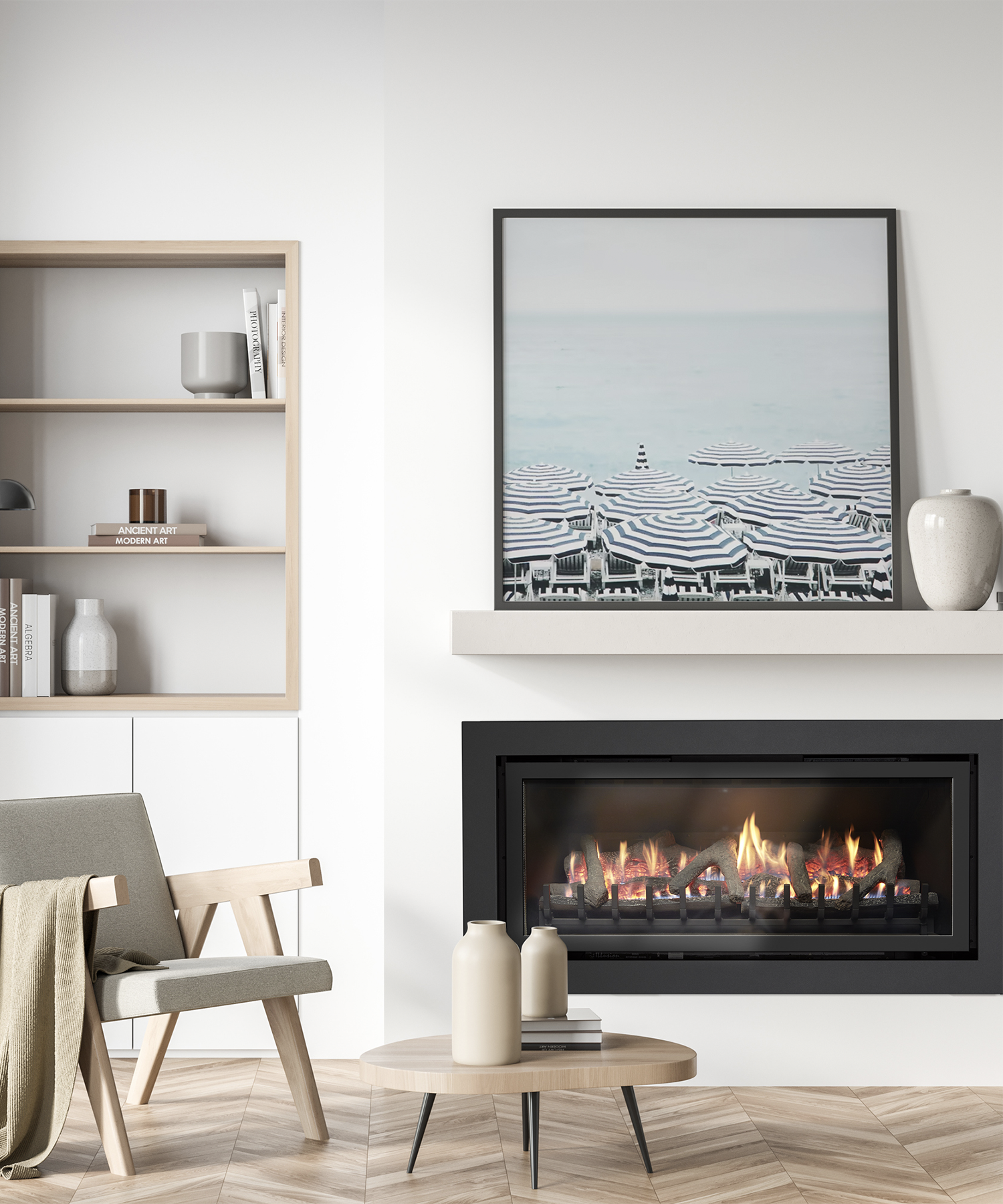
A slim contemporary surround suits many apartments and townhouses. It keeps the fireplace clean and simple, especially when the room already has plain walls, modern joinery and lower ceiling heights.
A wider wall unit or cabinetry-style surround suits open-plan rooms. It can connect the fireplace with a TV, storage, display shelves or low cabinetry. This approach usually needs more planning, but it can stop the electric fireplace from looking too small on a large wall.
Finish choice should be quiet and practical. Warm whites, soft neutrals, timber tones, stone-look finishes and muted wall colours tend to last longer than strong trend colours. The mantel should sit comfortably with the flooring, wall colour, joinery and furniture size.
What should be checked before ordering?
An electric fireplace mantel should not be ordered from a single product photo. The wall, room and installation details need to be checked first.
Use this checklist before choosing the mantel suite:
- Fireplace model and size: Confirm the exact fireplace model before choosing the mantel.
- Mantel dimensions: Check width, height and depth against the wall, not just the fire.
- Wall width and height: Measure the full wall, ceiling height and any side clearances.
- Skirting boards: Check whether the mantel sits over, in front of or around the skirting.
- Power point location: Work out whether the existing power point is usable or needs moving.
- Plug-in or hardwired setup: Use a licensed electrician for new power points or hardwiring.
- Curtains and furniture: Keep clear of curtains, lounges, cabinets and walkways.
- TV height and bracket position: Decide the screen height before the mantel is fitted.
- Flooring level: Check for uneven floors, thick carpet, rugs or changes in floor finish.
- Delivery access: Measure doorways, stairs, lifts and tight corners.
- Installer requirements: Confirm fixing, ventilation, clearance and access needs before ordering.
A mantel suite is often chosen for how it looks, but the order should only be placed after the practical checks are done.
Ready-made mantel suite or custom feature wall?
A ready-made mantel suite is not always better than a custom feature wall. The right choice depends on the room, the fireplace, the TV plan and the amount of building work already happening.
| Option | Best for | Trade-off |
|---|---|---|
| Ready-made mantel suite | Faster visual finish and a cleaner decision | Limited size and finish choices |
| Custom feature wall | Exact fit for TV, storage and room scale | More planning, trades and cost |
| Simple wall installation | Minimal room impact | Less architectural presence |
A ready-made mantel suite can work well when the room is already close to the right proportions. It can give the fireplace a more complete appearance without designing a whole wall from scratch.
A custom feature wall makes more sense when the fireplace sits under a TV, beside cabinetry or across a large open-plan wall. It gives more control, but it also brings more decisions. Framing, plastering, electrical work, joinery, finishing and access all need to be coordinated.
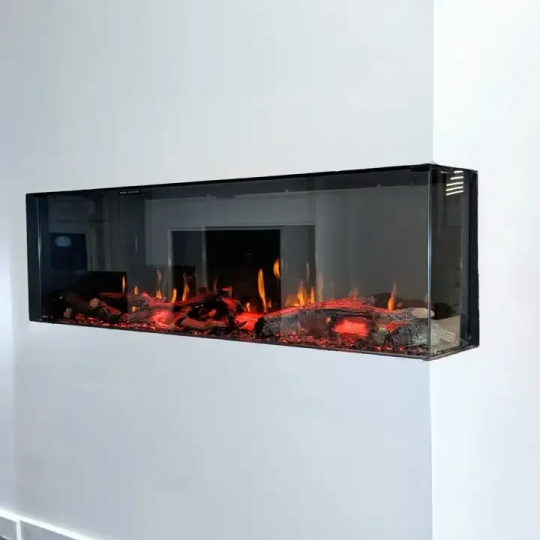
A simple wall installation may suit rooms where the fireplace should feel light and minimal. It can work well in smaller spaces, but it may not give the same furniture-like presence as a mantel suite.
Bring measurements before choosing the mantel
Choosing a mantel is easier when the room details are clear. Photos and measurements help showroom staff match the fireplace, mantel suite and wall proportions before the design goes too far.
Bring these details if possible:
- Wall width and ceiling height
- Photos of the full fireplace wall
- Photos of the opposite side of the room
- Existing power point location
- TV size and preferred TV position
- Rough furniture layout
- Floor plan or renovation drawings
- Skirting board and window positions
- Notes on curtains, cabinetry or nearby doors
The aim is to avoid a fireplace wall that looks good in isolation but feels wrong once the furniture, TV, power and room movement are considered. A few basic measurements can prevent a mantel that is too tall, too deep, too narrow or difficult to install.
Frequently asked questions
Can any mantel go around an electric fireplace?
No. The mantel needs to suit the exact electric fireplace model, heat path, ventilation, fixing method and manufacturer instructions. A mantel that works with one electric fireplace may not suit another.
Does an electric fireplace mantel need a flue?
No. Electric fireplaces do not need a gas flue. This is one reason they can suit apartments, townhouses and renovations where gas flueing is difficult or impractical.
Can a TV go above an electric fireplace mantel?
Often, yes. The viewing height, heat path, wall depth, bracket position and cable route should be planned before the mantel is installed. A lower mantel can help keep the TV at a more comfortable height.
Is a mantel suite better than a custom feature wall?
Neither option is automatically better. A mantel suite can be simpler and more furniture-like. A custom feature wall can suit larger rooms, TV walls and storage layouts.
What measurements should I take before visiting a showroom?
Measure the wall width, ceiling height, power point location, TV size, furniture position, skirting boards and any nearby windows or doors. Bring photos of the wall and room as well.

Leave a comment
This site is protected by hCaptcha and the hCaptcha Privacy Policy and Terms of Service apply.