
Gas log fireplace terminology can be confusing because several different trades and decisions meet in one product. A gas fireplace is part heater, part design feature, part gas appliance, part flued installation and, in many renovations, part cabinetry or wall framing.
At Illusion Fires, we manufacture gas log fireplaces in Melbourne, so these are the terms people often hear when comparing an inbuilt gas fireplace, freestanding gas log fire or fireplace insert. A clear definition will not replace advice from a licensed gasfitter, but it can make quotes, product pages, installation manuals and showroom conversations easier to understand.
The main thing to remember is that gas fireplace language is practical. Terms such as firebox, flue, clearance, zero clearance, MJ/h and Type A appliance all affect how the fireplace looks, where it can go and what has to be checked before a model is chosen.
Gas log fireplace terms buyers should know first
The most useful gas log fireplace terms are the ones that affect the buying decision early. They help separate product style, heating capacity, installation pathway and room design.
| Term | Plain meaning | Why it matters |
|---|---|---|
| Gas log fireplace | A gas-fuelled fireplace designed to look like a log fire while using gas as the fuel source. | This is the broad product category covering inbuilt and freestanding models. |
| Gas log fire | Another common name for a gas log fireplace. | The terms are often used together on product pages and quotes. |
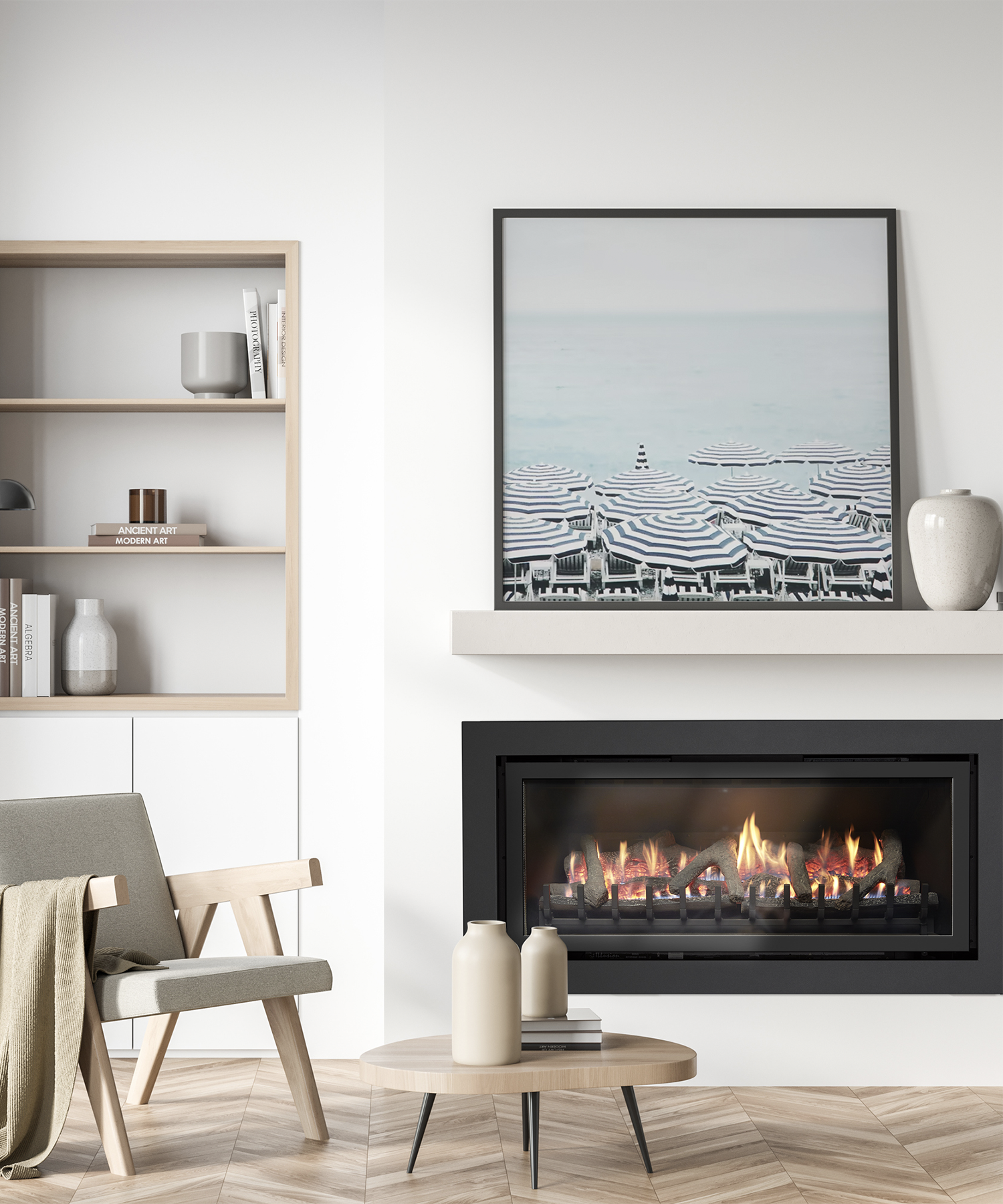
| Inbuilt gas fireplace | A gas fireplace built into a wall, existing chimney, fireplace opening or purpose-built cavity. | It usually needs planning around wall depth, framing, clearances and finishes. |
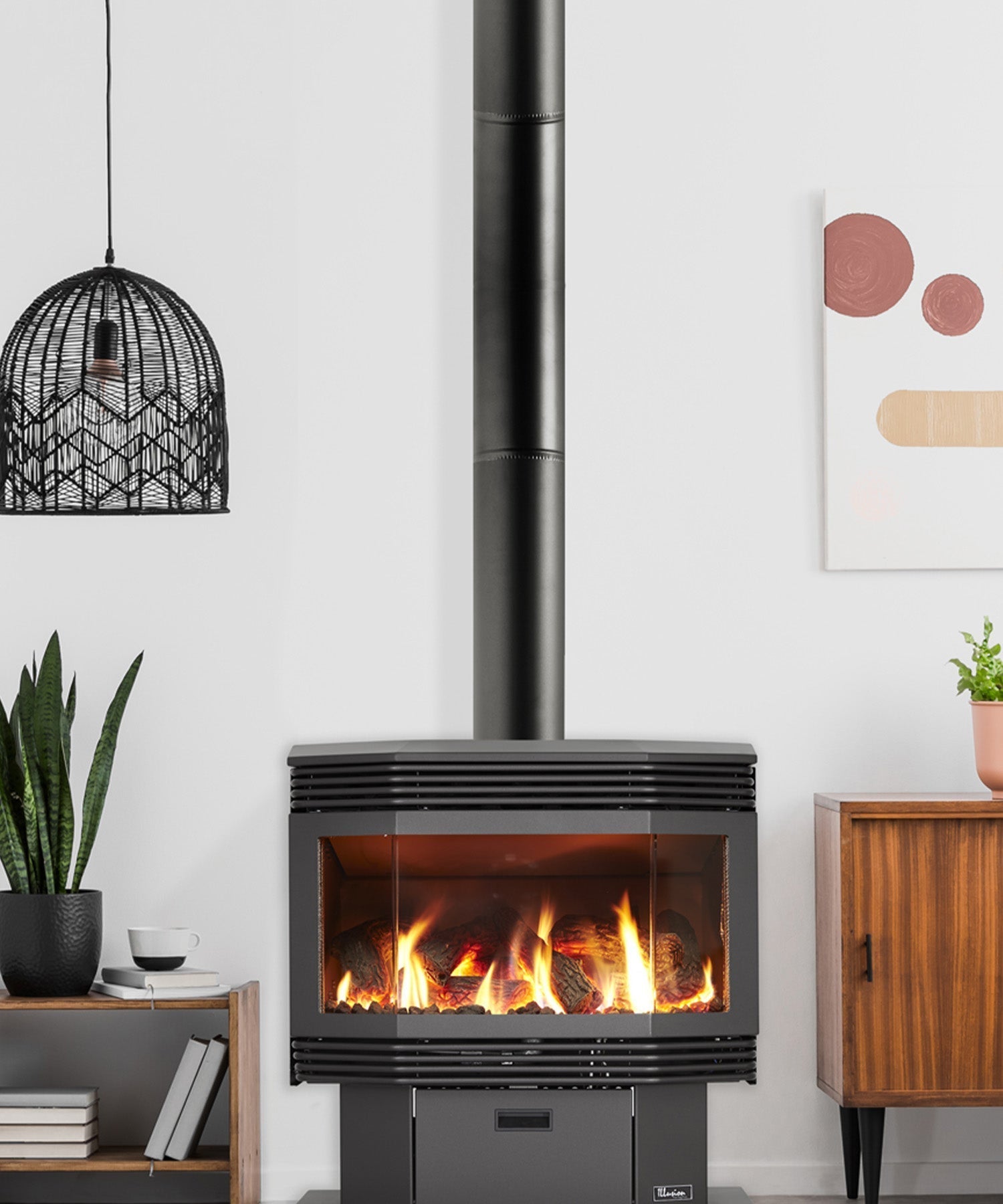
| Freestanding gas log fire | A gas log fire designed to sit in the room rather than inside a wall cavity. | It changes the room layout, flue position and visual style. |
| Gas fireplace insert | A self-contained fireplace designed to fit into an existing fireplace opening or prepared cavity. | It is often considered during older fireplace conversions. |
| Firebox | The main body of the fireplace where combustion and flame presentation occur. | Firebox size affects heat output, viewing area, cavity planning and warranty. |
| Flue | The system that carries combustion products safely outside. | A gas log fireplace usually needs a planned flue path. |
| Clearance | The required distance between the fireplace, flue or hot surfaces and nearby materials. | Clearances control wall framing, mantel design, TV placement and cabinetry. |
| Zero clearance | A term used for appliances designed for installation into framed spaces with specified clearances. | It does not mean the fireplace can touch any material with no gap. |
| Mantel | A shelf or decorative frame above or around a fireplace. | Mantel height, depth and material can be affected by heat and clearances. |
| Surround | The visible finishing material or frame around the fireplace opening. | It affects the final look and can also affect heat-safe material choices. |
| Hearth | The base or floor area in front of or under a fireplace. | Some designs need a hearth for appearance, protection or installation compliance. |
| Heat output | The amount of heat a fireplace can produce. | It helps match the model to the room size and layout. |
| MJ/h | Megajoules per hour, a common Australian gas appliance input rating. | It describes gas consumption, not always the exact heat felt in the room. |
| Thermostat | A control that helps regulate room temperature. | It makes zone heating more practical and avoids overheating the room. |
| Remote control | A handheld control for flame height, temperature or timer functions, depending on the model. | It is part of the convenience that draws many people to gas fireplaces. |
Installation and compliance terms
Gas installation terms should be treated as safety and compliance language, not as DIY instructions. A homeowner should understand what the words mean, but gas work must be carried out by a licensed gasfitter.
| Term | Plain meaning | Why it matters |
|---|---|---|
| AS/NZS 5601.1:2022 | The current Australian and New Zealand gas installation standard for general installations. | It is the main standard gasfitters refer to for domestic gas installation work. |
| Amendment 2 | A September 2024 amendment to the AS/NZS 5601 gas installation standards. | Older articles and quotes may refer to outdated wording, so the current standard should be checked. |
| Type A gas appliance | A common classification for domestic gas appliances, including many gas heaters and fireplaces. | It helps separate domestic appliances from larger or more complex commercial gas equipment. |
| Licensed gasfitter | A person licensed to carry out gas work. | Gas line, connection, testing and commissioning work must not be handled as a homeowner task. |
| Manufacturer installation manual | The model-specific document that sets installation requirements for that fireplace. | It controls clearances, flueing, framing and other details for the exact unit. |
| Gas line | The pipework that supplies gas to the fireplace. | Its position and capacity need to suit the chosen appliance. |
| Gas isolation valve | A valve used to isolate gas supply to the appliance or part of the installation. | It is a safety and service access item handled by the gasfitter. |
| Ventilation | Air movement required for safe operation, depending on the appliance type and installation. | Some older or open-fronted systems may need room ventilation, while sealed systems work differently. |
| Clearance to combustibles | The minimum distance from hot parts of the fireplace or flue to materials that can burn. | Timber framing, plasterboard, cabinetry and mantel materials need to be checked against this. |
| Flue termination | The point where the flue discharges outside. | It affects roof, wall, balcony and neighbour-facing placement. |
| Compliance certificate | Paperwork or state-specific documentation confirming the gas work has been carried out by the right practitioner. | The exact name and process can vary by state, so it should be checked before publication or installation. |
AS/NZS 5601.1:2022 should replace older references to AS5601-2004 in current public copy. Older standards references can remain in archived documents, but they should not be presented as the current installation framework.
Heat, efficiency and comfort terms
Heat language can be misleading if the terms are read as simple performance promises. Heat output, room comfort and running behaviour depend on the exact fireplace model, ceiling height, insulation, open-plan layout, local climate and how the heater is used.
| Term | Plain meaning | Why it matters |
|---|---|---|
| BTU | British Thermal Unit, an older or overseas heat measurement. | Australian gas appliance information more commonly uses MJ/h and kW. |
| kW | Kilowatt, a unit used to describe heat output or power. | It is useful when comparing different heating types. |
| MJ/h | Megajoules per hour, a measure of gas energy input. | It helps explain gas use, but it is not the same as room comfort. |
| Efficiency | The relationship between energy used and useful heat delivered. | A higher efficiency figure can mean less wasted energy, depending on the appliance and installation. |
| Convection heat | Heat moved through air circulation. | It helps warm the room air and can suit open living areas. |
| Radiant heat | Heat felt directly from a hot surface or flame area. | It gives a more immediate sense of warmth when seated near the fireplace. |
| Fan forced heat | Heat moved into the room with a fan. | It helps distribute warm air more evenly. |
| Zone heating | Heating the room or area being used rather than the whole house. | A gas log fireplace is often used this way in living rooms. |
| Thermostat | A temperature control that helps regulate heat output. | It reduces the need to adjust the fire manually. |
| Heat shield | A protective barrier or designed component that helps manage heat exposure. | It may be relevant near walls, mantels, TVs or cabinetry. |
| Cavity | The framed or prepared space that houses an inbuilt fireplace. | Cavity size is not the same as clearance, but both matter. |
| Room size | The floor area and volume the fireplace is expected to heat. | A large open-plan room needs different thinking from a small lounge. |
A high MJ/h appliance is not automatically the right model. A fireplace that is too large for a small, well-insulated room can be uncomfortable. A fireplace that is too small for a large, draughty open-plan area may need to run harder than expected.
Parts of a gas log fireplace
The visible parts of a gas log fireplace are only part of the system. The burner, controls, flue, glass, fascia and internal safety components all affect how the fireplace works.
| Part | Plain meaning | Why it matters |
|---|---|---|
| Firebox | The main body of the fireplace. | It houses the flame area and forms the core structure of the appliance. |
| Burner | The component that controls where gas burns. | It shapes flame pattern and heat delivery. |
| Decorative logs | Ceramic or similar log pieces arranged to create the look of a wood fire. | They affect the visual style but must be used as designed for the model. |
| Media bed | The decorative base around the flame, such as logs, pebbles or other approved media. | Only approved media should be used. |
| Glass front | The glass panel at the front of many modern gas fireplaces. | It improves safety and helps sealed systems operate correctly. |
| Fascia | The visible front frame or face of the fireplace. | Fascia choice changes the final room appearance. |
| Trim | A finishing edge around the appliance or opening. | It helps create a clean join between the fireplace and wall finish. |
| Surround | The broader finish around the fireplace. | It may include stone, tile, plaster, metal or other materials. |
| Mantel | A shelf or decorative feature above the fireplace. | It needs heat and clearance checks before installation. |
| Hearth | The base or floor area below or in front of the fireplace. | It can be decorative, practical or required by the installation design. |
| Air vent | A grille or vent used where the appliance or room design requires ventilation. | Do not assume every gas log fire needs the same venting arrangement. |
| Control module | The electronic or mechanical control system. | It can affect ignition, flame control, thermostat function and servicing. |
| Ignition | The system that lights the fireplace. | Common terms include standing pilot, millivolt ignition and electronic ignition. |
| Pilot light | A small flame that stays lit on some models. | Not all modern gas log fireplaces use a standing pilot. |
| Flame failure device | A safety feature that shuts off gas if the flame is not detected. | It is part of the appliance built-in safety system. |
| Safety shutoff | A general term for a device that stops gas flow in unsafe conditions. | It should be understood as a safety function, not a user service task. |
Modern gas log fireplaces vary by collection and model. A term that applies to one range may not apply to another, especially around ignition type, fan system, flueing and control options.
Flue and wall terms
Flue and wall language matters because a fireplace is not just placed in a room. It has to connect safely to the outside and sit within a wall, chimney, false wall or freestanding position that suits the model.
| Term | Plain meaning | Why it matters |
|---|---|---|
| Flue | The pathway that carries combustion products outside. | The flue route can control where the fireplace can go. |
| Balanced flue | A sealed flue system that draws combustion air from outside and expels combustion products outside. | It can reduce the need for room air ventilation on compatible room-sealed models. |
| Direct vent | A related term used by some brands for sealed systems that draw air from outside and exhaust outside. | Confirm the exact language against the model being considered. |
| Chimney breast | The projecting wall section that contains or imitates a chimney structure. | It can frame an inbuilt fireplace and hide flue or service space. |
| Feature wall | A designed wall that makes the fireplace the visual centre of the room. | It often combines fireplace, TV, joinery, shelving or stonework. |
| Cavity | The space built to house the fireplace. | It must suit the unit, flue path and heat management requirements. |
| False wall | A non-structural wall built forward of the existing wall. | It can help create depth for an inbuilt fireplace or TV recess. |
| Recess | A set-back space within the wall. | It can be used for the fireplace, TV or cabinetry details. |
| Heat-resistant lining | Material used where heat exposure requires a suitable lining. | The exact requirement depends on the model and installation manual. |
| Mantel shelf | A shelf above the fireplace. | Depth, height and material should be checked before it is built. |
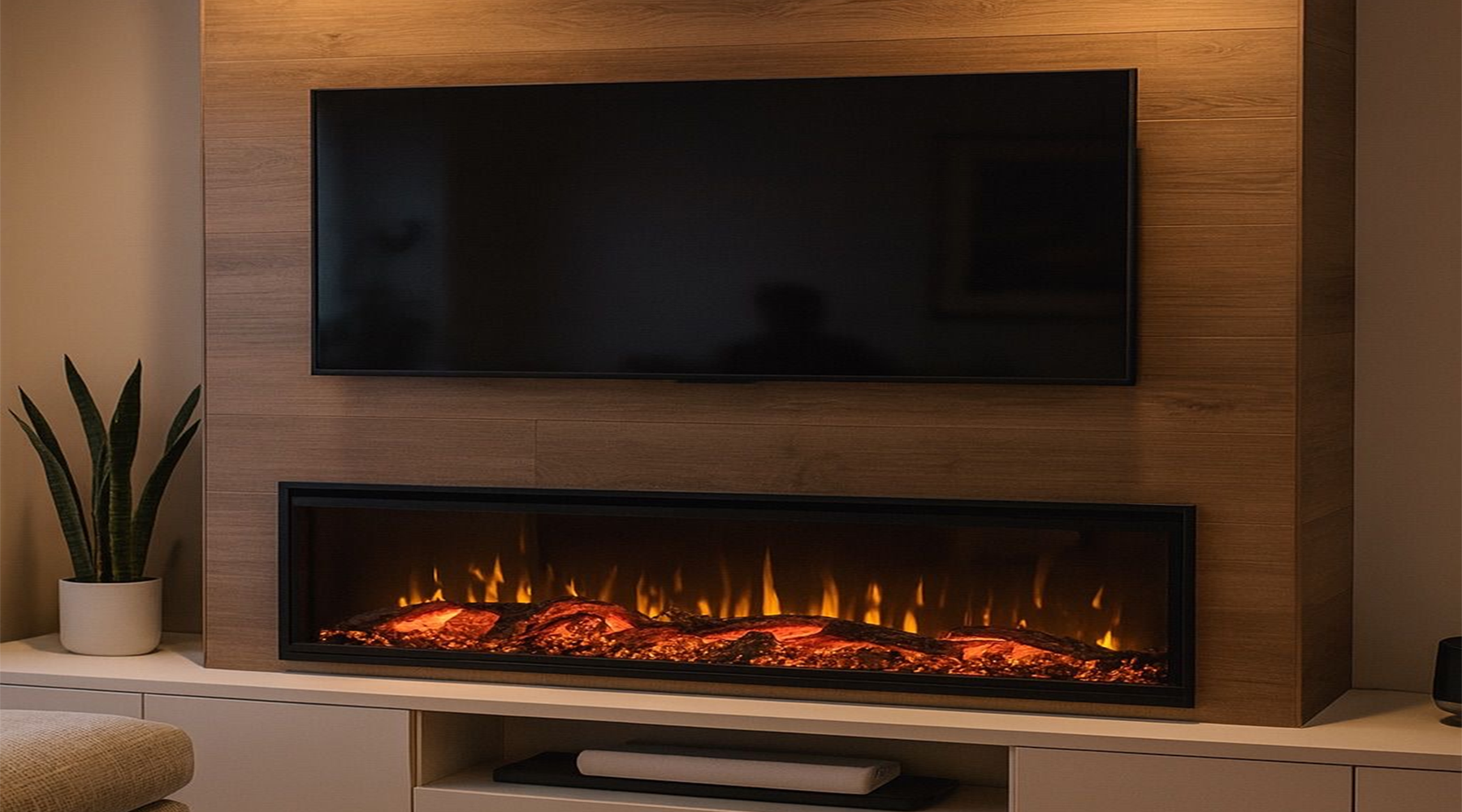
| TV recess | A recessed area for a television above or beside the fireplace. | It needs heat, cable access, viewing height and service access planning. |
A chimney breast or feature wall should be planned before the model is locked in. The fireplace opening, wall depth, flue path, TV height and finished surface all influence each other.
Terms that are often confused
Gas fireplace terminology often overlaps. These comparisons help separate similar terms that can mean different things during a quote or showroom visit.
| Terms | Difference |
|---|---|
| Gas fireplace vs gas heater | A gas fireplace is designed as both heater and visual flame feature. A gas heater may focus mainly on heat output with less design emphasis. |
| Inbuilt gas fireplace vs gas fireplace insert | An inbuilt fireplace is designed to be built into a wall or cavity. An insert is usually discussed when fitting a unit into an existing fireplace opening or prepared enclosure. |
| Mantel vs surround | A mantel is usually the shelf or decorative frame above or around the fireplace. A surround is the broader finishing area around the fire opening. |
| Hearth vs floor protection | A hearth is the base area associated with a fireplace. Floor protection is the practical or compliance function that may be required under or around an appliance. |
| Clearance vs cavity size | Clearance is the required distance from heat-sensitive materials. Cavity size is the physical space built to house the unit. A cavity can be large enough but still fail a clearance check. |
| Heat output vs efficiency | Heat output describes how much heat the appliance can produce. Efficiency describes how much useful heat is gained from the energy used. |
| Pilot light vs electronic ignition | A pilot light is a small standing flame on some models. Electronic ignition lights on demand and may need mains power or battery backup, depending on the unit. |
| Gas log fire vs wood heater | A gas log fire uses gas and can usually be controlled by remote or thermostat. A wood heater burns solid fuel and is governed by different installation and emissions standards. |
The safest way to handle similar terms is to attach them to the specific model being discussed. A general definition helps, but the installation manual and product specifications carry the final detail.
Talk through the terms before choosing a model
The best fireplace choice usually becomes clearer once the terms are matched to the room. Bring photos, wall measurements, ceiling height, floor plans and renovation drawings to a showroom conversation. If there is an existing fireplace, measure the opening and take photos of the chimney, wall and surrounding floor.
Useful details to bring include:
- Wall width and height: Helps narrow down inbuilt and feature-wall options.
- Room size and layout: Helps match heat output to the space.
- Existing fireplace photos: Helps assess whether insert-style language is relevant.
- TV position: Helps identify heat and viewing-height issues early.
- Gas supply information: Helps the gasfitter understand what may need checking.
- Renovation plans: Helps connect the fireplace, flue, cabinetry and finishes before building starts.
- Preferred finish: Helps compare mantel, surround, fascia and hearth options.
Our gas log fireplaces are made in Australia, with inbuilt and freestanding collections designed for different homes, walls and heating needs. The terminology is useful because it helps turn a vague fireplace idea into a clearer model, installation path and room plan.
Common gas fireplace questions
Does zero clearance mean no clearance at all?
No. Zero clearance does not mean a gas fireplace can touch any material with no gap. It means the appliance has been designed and tested for installation into certain framed spaces when the specified installation requirements are followed.
Do all gas log fireplaces need a flue?
Gas log fireplaces need a safe way to discharge combustion products outside. The flue type and route depend on the model, the room, the wall or roof path and the installation manual.
Is a gas fireplace insert the same as an inbuilt gas fireplace?
Not always. The terms can overlap in casual conversation, but an insert is usually discussed when working with an existing fireplace opening. An inbuilt gas fireplace may be installed into an existing fireplace, a new framed cavity or a designed feature wall, depending on the model.
Is MJ/h the same as heat output?
MJ/h describes gas energy input. It helps explain appliance rating and gas use, but comfort in the room depends on efficiency, fan performance, layout, insulation, ceiling height and the way the fireplace is used.
Can a TV go above a gas fireplace?
Sometimes. TV placement above a gas fireplace depends on the model, heat direction, mantel design, wall construction, recess depth and manufacturer clearance requirements. It should be planned before the wall is built.
Who can install a gas log fireplace?
Gas work must be carried out by a licensed gasfitter. Wall framing, cabinetry, electrical work and finishing may involve other trades, depending on the project. The final installation path should follow the model manual and the current gas installation standard.

Leave a comment
This site is protected by hCaptcha and the hCaptcha Privacy Policy and Terms of Service apply.