
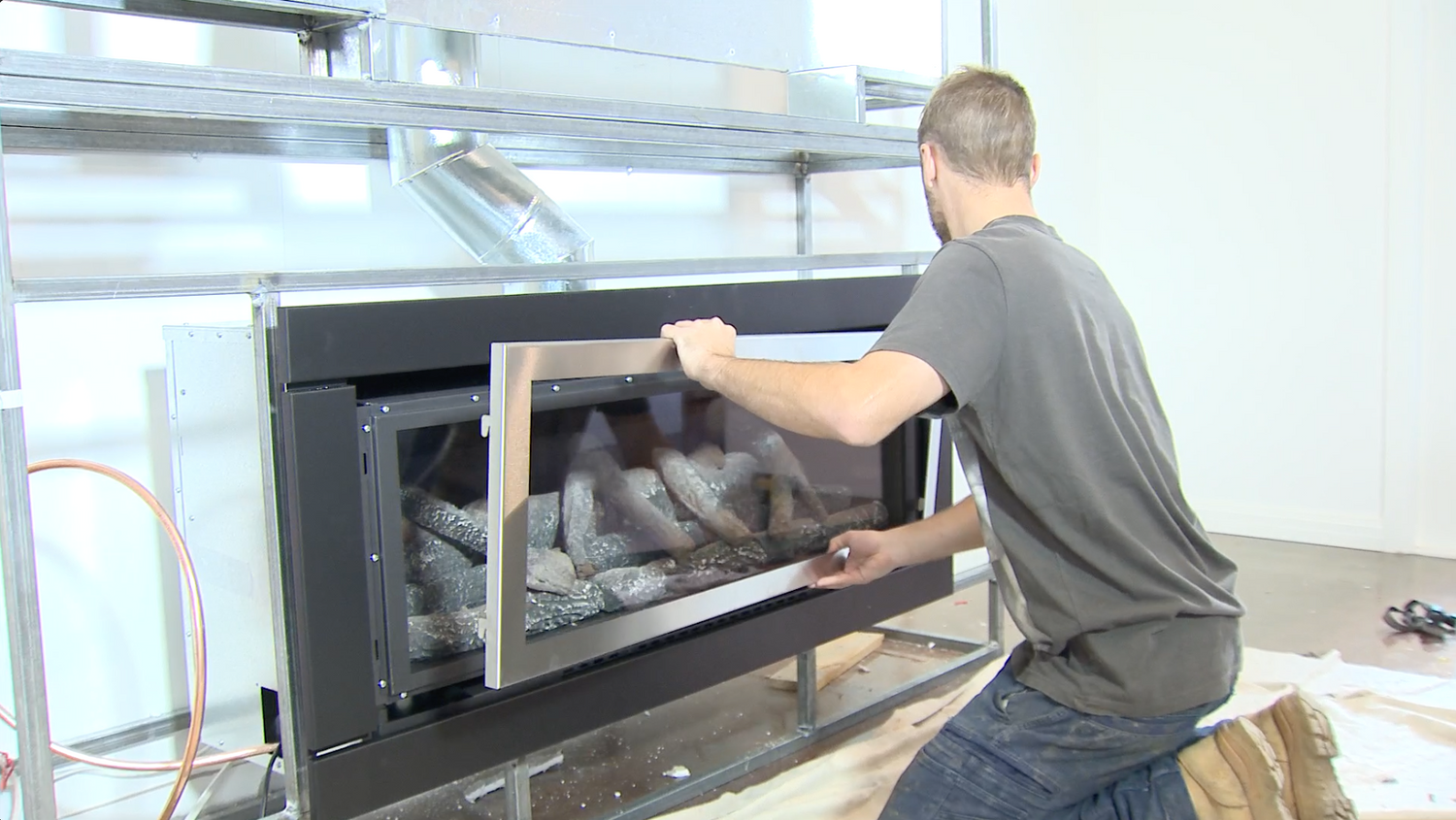
A gas log fireplace installation in Australia commonly lands around $5,000 to $15,000 or more. That figure counts the fireplace, flue, gasfitting, wall work and finish together. The installation component alone can sit around $2,000 to $7,500, with simpler jobs lower and complex jobs higher. Illusion Fires manufactures gas log fireplaces in Melbourne and sells factory-direct. The final installed cost still depends on the room, the model, the gas line and the flue path.
How much does it cost to install a gas log fireplace?
The safest starting budget for a gas log fireplace is the full project cost, not the unit price alone. A fireplace may look like one product on a quote. The finished job brings together the appliance, flue system, licensed gasfitter, wall or cavity work, electrical connection, compliance paperwork and make-good.
For many Australian homes, the full project can sit around $5,000 to $15,000 or more. A simple freestanding gas log fire near an existing gas point may sit at the lower end. A built-in feature wall with a long flue run, new gas line and custom finishing can move much higher.
This is why two homes can choose the same fireplace and receive different installation prices. One home may have an old chimney that can be adapted. Another may need a new framed cavity, roof penetration, gas line extension, plaster repair and finishing work. The fireplace is the same. The building around it is not.
Four room scenarios shape the quote before the model is even chosen. An existing fireplace, a new cavity, a replacement unit and a freestanding model all change the cost. Each option affects the flue path, wall work, gas connection and final finish.
What affects the price?
A gas fireplace installation price changes because the installer is pricing the whole path. That path runs from the appliance to the outside air, the gas supply and the finished wall. The more work needed to create that path, the higher the quote becomes.
Inbuilt gas log fireplaces usually need more building work than freestanding models. They may need a purpose-built cavity, framing, non-combustible lining, a mantel or surround, plastering and painting. Freestanding gas log fireplaces can reduce wall work, but they still need the right flue, clearances and gas connection.
Older Melbourne homes can add another layer. Edwardian and inter-war houses may have blocked chimneys, old brickwork, uneven openings or earlier renovation work behind the plaster. Those issues are often manageable, but they can add labour and make-good.
| Line item | Typical range | What changes it |
|---|---|---|
| Gas log fireplace unit | About $3,000 to $10,000+ | Size, collection, finish, inbuilt or freestanding design |
| Installation labour | About $2,000 to $7,500 | Access, flue length, roof type, wall work and site difficulty |
| New gas line or extension | About $500 to $2,000+ | Distance from supply, access under floors or through walls, meter capacity |
| Flue kit and termination | About $500 to $2,500+ | Straight run, offsets, double storey height and roof access |
| Cavity, framing and lining | About $1,000 to $5,000+ | New feature wall, chimney breast, non-combustible materials and finish level |
| Make-good and finishing | About $500 to $3,000+ | Plastering, painting, surrounds, shelving, cabinetry and stone or tile work |
| Compliance and certification | Usually included or itemised | State rules, job type and licensed gasfitter documentation |
The table is a guide, not an Illusion fixed price list. It should help you read a quote properly. If one quote looks cheaper, check whether it includes the same flue parts, wall work, compliance certificate and make-good.
Natural gas or LPG?
Natural gas and LPG both work with gas log fireplaces, but they can change the project cost. Natural gas is common across much of Melbourne and many established suburbs. LPG means liquefied petroleum gas. It is stored in bottles or tanks and is common where mains gas is not available.
LPG can suit regional Victorian homes or properties outside the natural gas network. It may also be relevant for homes where a mains gas connection is impractical. The fireplace model needs to be set up for the right gas type. The supply also needs to be sized for the appliance.
The installed price can rise if LPG bottles, regulators, pipework, storage clearance or delivery access need planning. Running costs can also differ because LPG is bought differently from mains gas. The right comparison is not just the heater price. It is the appliance, the gas supply, the installation path and the ongoing fuel cost.
What should a gas fireplace quote include?
A gas fireplace quote should make clear what is included, what is excluded and who is responsible for each trade. A clean quote is easier to compare than a low headline price with missing items.
Fireplace unit: The quote should name the exact model, size, finish and gas type. Illusion gas log fireplaces include inbuilt and freestanding options across several collections, so a vague line item is not enough.
Flue system: The flue is the pipe system that carries combustion gases outside. The quote should state whether the flue kit, termination, offsets and roof work are included.
Gasfitting labour: Gas work must be handled by a licensed gasfitter. The quote should state who connects the appliance, tests the installation and supplies the required paperwork.
Electrical work: Some gas log fireplaces need power for ignition, fans, lights or controls. If an electrician is needed, the quote should say whether that cost is included.
Cavity and wall work: Built-in gas fireplaces may need framing, sheeting, non-combustible lining, plastering, painting, stone, tile or cabinetry. These costs can sit outside the fireplace quote if a builder or cabinetmaker is involved.
Make-good: Make-good means the repair and finishing work after the installation. It may include plaster patches, painting, skirting, flooring edges or trim around the fireplace.
Compliance certificate: In Victoria, a licensed gasfitter must provide the required compliance documentation for relevant gas work. Other states have their own documentation rules. Ask for this to be shown clearly, not assumed.
Why buying direct from the manufacturer can change the cost
Buying direct from the manufacturer can change the value of a gas log fireplace project. Fewer layers sit between the product, the advice and the support. Illusion Fires manufactures in Melbourne and sells factory-direct. The showroom conversation can connect the room design with the appliance range more directly.
Factory-direct does not remove the need for licensed installation. It also does not make every home cheaper to work on. A difficult flue run is still a difficult flue run. A new gas line still needs gasfitting. A custom feature wall still needs careful finishing.
The value is in choosing the right unit before building work starts. A fireplace that suits the opening, heat need and flue path can prevent expensive changes later. That matters for renovations, where a decision made after framing starts can force rework.
Long-term support also belongs in the cost discussion. Illusion gas log fires come with a 10-year firebox warranty. That belongs in the value of buying a fireplace made and supported by the same business. A cheaper quote loses its appeal if the model, parts pathway or installation plan is unclear.
How much to install a gas fireplace in an existing fireplace?
Installing a gas fireplace in an existing fireplace can be cheaper than building a new cavity. That only holds when the old space is suitable. The opening, chimney, hearth, surrounding materials, gas access and flue path all need to be checked.
Many older homes have fireplaces that were blocked, covered or used as storage. Reopening that space can give the room a natural focal point again. The original article made this point, and it is still useful. The missing detail is that old masonry can also hide cost. Brick repairs, lintel work, plaster removal, non-combustible lining and chimney assessment can affect the quote.
If the existing fireplace is already central to the room, the design side may be easier. Furniture, TV placement and the room's visual centre may already work around that wall. The installation still needs a licensed gasfitter and the correct appliance, flue and clearances.
Does the gas line cost extra?
A new gas line or gas line extension often costs extra. This applies when the existing gas supply does not reach the fireplace position. As a guide, Australian gas line work can add around $500 to $2,000 or more. Distance, access and complexity change the price.
The gasfitter may also need to check whether the existing meter and pipework can support the new appliance. This matters when a home already has gas hot water, gas cooking or ducted gas heating. The issue is not just whether gas exists at the property. The supply must suit the added load.
How long does installation take?
A simple gas fireplace installation may take one day once the site is ready. A more involved built-in fireplace can take several visits. Framing, gasfitting, flue work, plastering, painting and final commissioning do not always happen on the same day.
The cleanest projects are planned before the renovation reaches the wall-framing stage. Harder projects often start after a wall, cabinet or TV layout is already built. That can lock in assumptions that do not match the fireplace manual.
Can I install a gas fireplace myself?
You cannot install a gas fireplace yourself. Gas fireplace installation must be completed by a licensed gasfitter, with the right compliance documentation provided for the work.
A homeowner can still prepare for the quote. Useful preparation includes photos of the room, the outside wall or roofline and the gas meter position. Also bring nearby power point locations, existing fireplace photos and any plans for cabinetry or TV placement. That information helps the consultant and installer spot cost issues early.
Is gas cheaper to install than electric or wood?
Gas usually costs more to install than a simple electric fireplace because it needs a gas connection and flue. It may cost less than some wood heater installations. Those jobs can need a full flue system, hearth, clearances and smoke planning.
The better question is which heater suits the room and the home. Electric can be simpler for apartments or decorative heat. Gas suits homeowners who want real flame ambience, strong convenience and consistent heat without storing firewood. Wood suits homes where firewood access, high heat output and the traditional fire experience matter more.
What to do next
A useful gas log fireplace quote starts with the room, not a generic number. Bring photos, rough measurements, gas meter location, ceiling height and roof type to an Illusion showroom or enquiry. Include any renovation drawings.
The next step is to match the fireplace to the room, then check the flue path, gas supply and finish. That gives you a quote you can trust. The unit, installation work and exclusions are set out before the project starts.

Leave a comment
This site is protected by hCaptcha and the hCaptcha Privacy Policy and Terms of Service apply.