
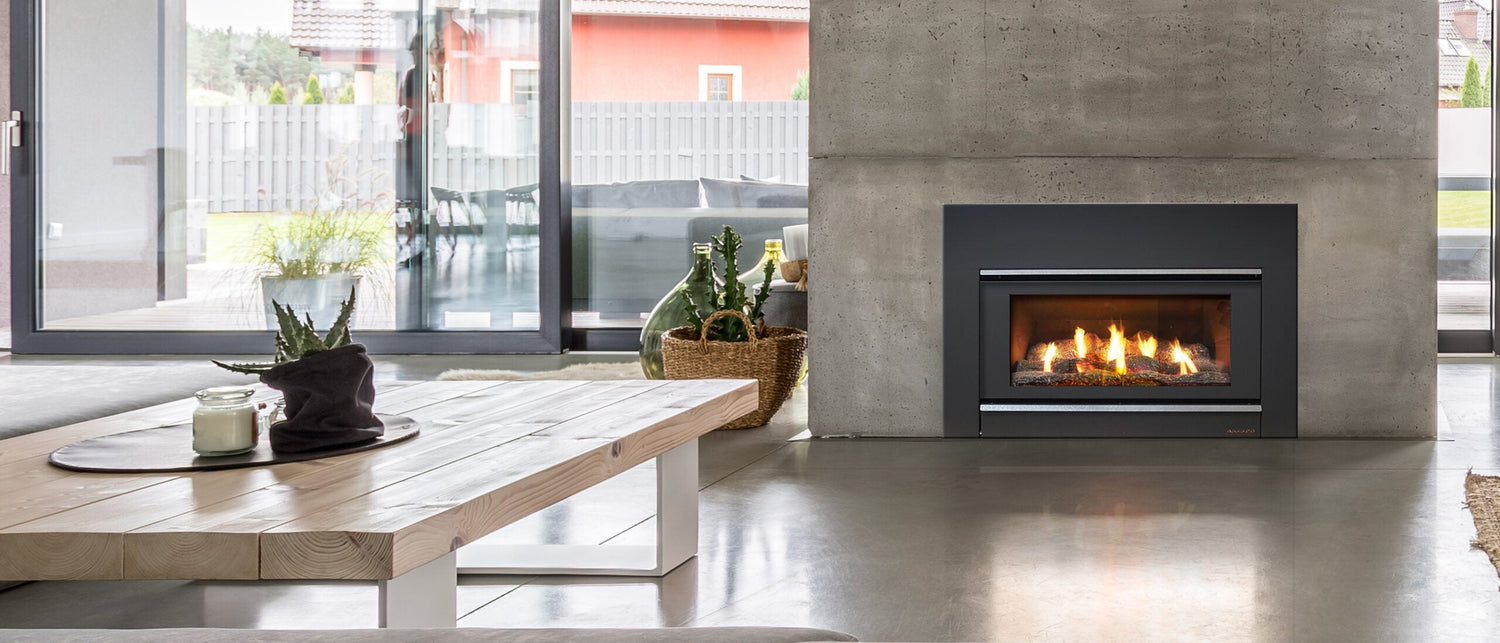
You’re weighing up gas heating for the lounge, and one worry keeps surfacing. Will it send fumes into the room where the family sits each night? It’s a reasonable thing to ask. The answer comes down to whether the heater is flued or unflued.
A flued gas heater carries its exhaust outside through a flue. An unflued one lets it into the room. That one difference decides where each heater belongs, who can install it, and how much safety thinking it needs.
Choosing the right indoor gas heater gets simpler once you can see that split. Illusion Fires builds flued gas log fireplaces in Dandenong South, Melbourne, so this is the question we field most often through winter. Here’s how the options compare.
What’s the difference between a flued and unflued gas heater?
A flued gas heater connects to a flue, a pipe that takes the burnt gases outside. An unflued heater has no flue, so those gases stay in the room.
Three setups turn up in most Australian homes.
- Flued gas heaters burn gas and send the exhaust outdoors through a flue. Gas log fireplaces and many gas wall heaters (wall furnaces) work this way. The flame sits behind glass or inside a firebox, and the fumes travel up and out.
- Room-sealed (balanced flue) heaters go further again. They pull their combustion air from outside and push the exhaust back outside, through a flue split into two paths. The fire is closed off from the air you breathe. Illusion’s gas log fires are made this way.
- Unflued (flueless) gas heaters carry no flue. They put heat and combustion products straight into the room. Portable gas heaters are the everyday example.
The more sealed a heater is from your living space, the less it asks of you day to day.
Flued gas log fire, flued wall furnace, or unflued portable: which suits where?
The right gas heater depends on the room, how it vents, and how long you run it.
| Heater type | How it vents | Installation | Where it suits |
|---|---|---|---|
| Flued gas log fireplace (room-sealed) | Draws air from outside and vents exhaust outside; sealed from the room | Fixed install by a licensed gasfitter, with a flue to outside | Living and family rooms, the main space you heat for hours |
| Flued gas wall furnace | Vents exhaust outside through a flue | Fixed install by a licensed gasfitter | Hallways and smaller rooms that need a permanent heater |
| Unflued portable gas heater | Vents into the room; needs a window left ajar | Plug and play, no install | Short bursts in well-aired spaces; never bedrooms or bathrooms |
A flued gas log fire earns its place in the room you live in. An unflued portable has its uses, but a living room you heat for hours is rarely one of them.
Are indoor gas heaters safe?
A gas heater is safe when it’s installed correctly, vented properly, and serviced on time.
Carbon monoxide is the reason servicing matters. It’s a gas you can’t see, smell, or taste, and Energy Safe Victoria notes that any gas heater can spill it, old or new, including decorative log fires. The risk stays low when a heater is sound and well aired. It climbs when a heater is faulty, blocked, or starved of fresh air.
Negative pressure is one trigger. Run a kitchen rangehood or bathroom fan in a sealed-up home, and it can pull exhaust back down an open flue instead of letting it escape. The Victorian Department of Health, through its Better Health Channel, warns against running exhaust fans while an unflued or open-flued heater is on, and against using an unflued heater in a bedroom or bathroom at all.
Symptoms of carbon monoxide exposure can look like the flu: headaches, tiredness, dizziness, and nausea. If they ease when you step outside, treat that as a sign and get checked.
A few habits keep a gas heater safe:
- Professional installation. A licensed gasfitter sets it up and tests it before you use it.
- A service at least every two years. The gasfitter checks for carbon monoxide spillage and negative pressure. Energy Safe Victoria recommends this minimum for all gas heaters.
- Clear ventilation. Keep permanent vents unblocked, and don’t seal a room so tightly that the heater can’t draw fresh air.
- The right heater for the room. Keep unflued portables out of bedrooms and bathrooms.
Since 1 August 2022, Victoria has banned the sale of older open-flued gas space heaters that can’t shut themselves down within 15 minutes if they spill combustion products. New ones sold today carry that safety cut-off.
Why a flued gas log fire is the low-worry choice for a living room
A flued gas log fire keeps the burning sealed away from your living space, which is what makes it easy to live with.
Illusion’s gas log fires use a balanced flue. The unit draws its combustion air from outside the home and sends the exhaust back outside, through separate paths in the same flue. A glass front seals the fire off from the room. You get the flame and the warmth, and the burnt gases never share your air.
"A balanced-flue gas log fire draws its air from outside and sends its exhaust back outside. The fire sits behind glass, sealed from the air in your room."
That sealed design is also built to last. Every Illusion firebox carries a 10-year warranty, which counts for a part that runs hot every winter for years. None of this removes the basic care any gas appliance needs. A flued gas log fire still wants a professional install and a service at least every two years. Low-worry is not no-maintenance.
Who can install a gas heater in Victoria?
In Victoria, only a licensed gasfitter can install a gas heater. This is not homeowner work.
Gas log fireplaces are classed as Type A gas appliances. They’re installed to AS/NZS 5601.1, the national gas installation standard, by a gasfitter endorsed for Type A work. You can check a gasfitter’s licence online before they start. The same licensed trade that fits the heater is the one that services it later.
For Victorian homes, that rule works in your favour. A heater installed and signed off correctly is one less thing to wonder about on a cold night.
Common questions about flued and unflued gas heaters
Can you use an unflued gas heater indoors?
Yes, but with care and good ventilation. An unflued gas heater releases its combustion products into the room, so it needs fresh air and should never run in a bedroom or bathroom. For a main living area you heat for hours, a flued heater is the more comfortable choice.
Do flued gas heaters need ventilation?
Yes. Even a flued heater relies on the room having enough fresh air, and on its permanent vents staying clear. A room-sealed (balanced flue) model is the least demanding here, because it draws its combustion air from outside rather than from the room.
How often should a gas heater be serviced?
At least once every two years by a licensed gasfitter is the minimum Energy Safe Victoria recommends. Yearly servicing is a sensible habit for a heater you use a lot. The service includes a carbon monoxide spillage check.
Is a gas log fireplace safe around children?
A flued gas log fire keeps the flame behind a glass front and vents its exhaust outside, which suits family rooms. The glass gets hot during use, so a fireguard is worth adding in homes with young children.
Can I install a gas heater myself?
No. Gas work in Victoria is restricted to licensed gasfitters by law. Fitting a gas heater yourself is unsafe and illegal, and it can void the unit’s warranty.
The clearest way to settle the flued-versus-unflued question is to stand in front of a flued gas log fire while it’s running. You can see the flame behind sealed glass, feel the warmth come off it, and notice how little it intrudes on the room. Illusion’s showrooms across Victoria, South Australia, Western Australia, and New South Wales have units running through winter. Book a showroom visit, and a consultant can match a flued gas log fire to your room size and venting before you commit to anything.

Leave a comment
This site is protected by hCaptcha and the hCaptcha Privacy Policy and Terms of Service apply.