
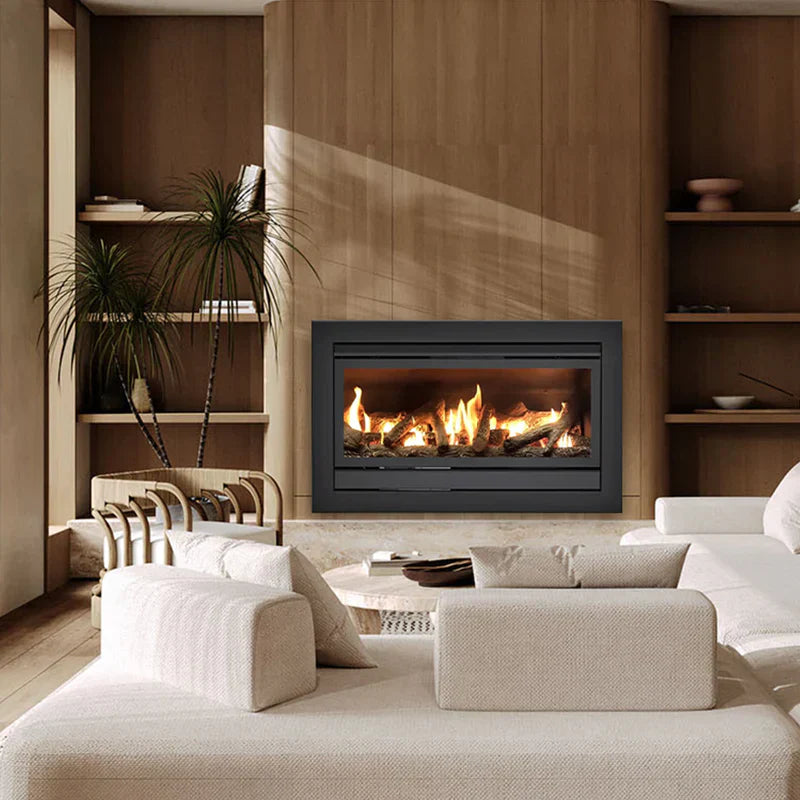
The plan is on the dining table. The architect has drawn a rectangle on the wall where the fireplace will go. Your framing carpenter starts on Monday.
You know you want a built-in fireplace. You haven't locked in whether to choose gas or electric, and you're not sure what to tell the trades. The decisions you make this week will shape what fits, what it costs, and how the wall looks when it's finished.
At Illusion Fires, we make Australian-made gas log and electric fireplaces in our Melbourne factory. We're Australia's largest manufacturer of gas log fireplaces and sell direct to homeowners across the country. Many of the buyers who walk into our showrooms with floor plans are at this exact moment: cavity not yet framed, fuel decision still open, finishes in the mood-board phase. The order you make these decisions matters. Get them right and the finished wall feels considered. Get them wrong and you'll be paying to cut through plaster six months after you've moved in.
Here are the three decisions to make before the framing carpenter starts, in the order to make them.
What is a built-in fireplace?

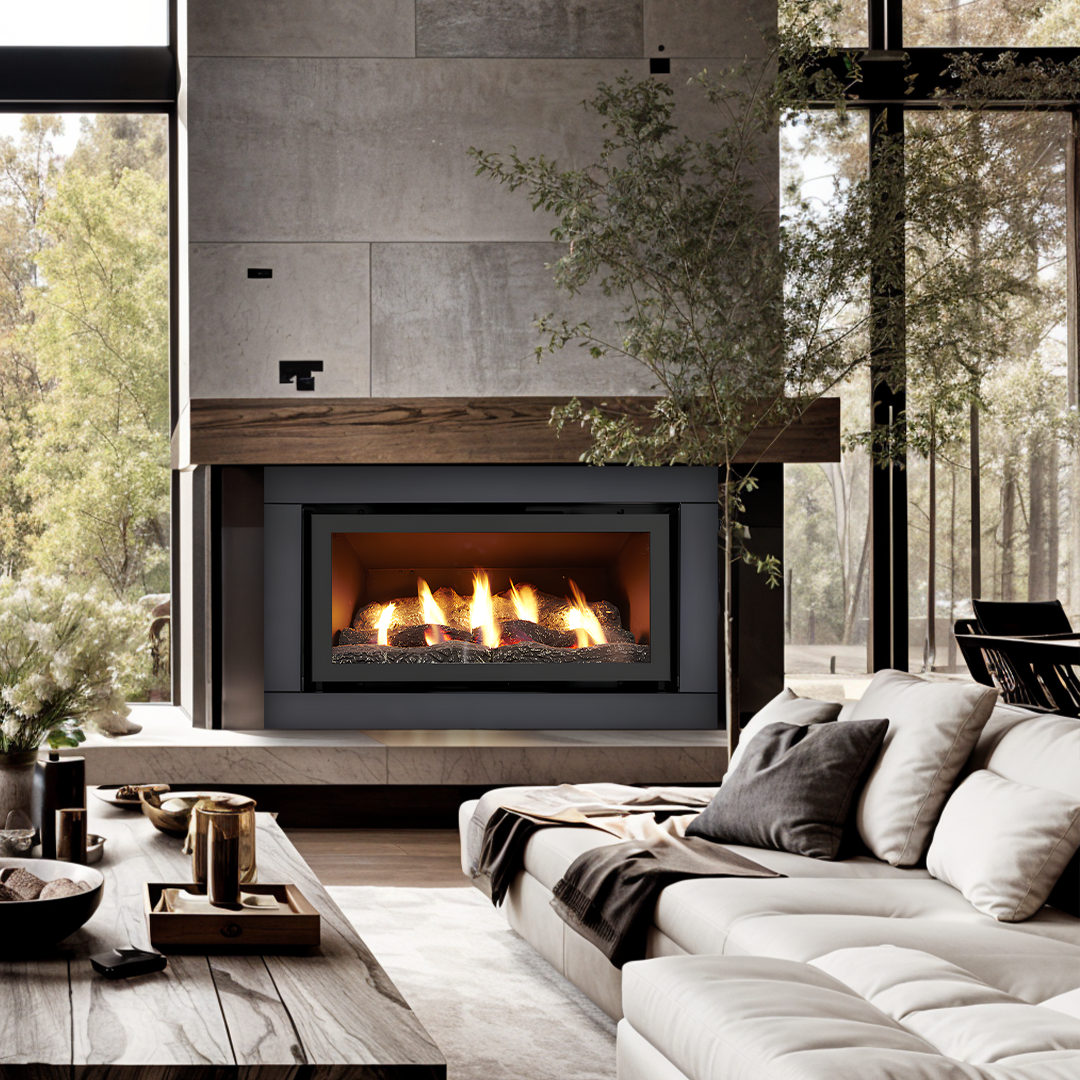
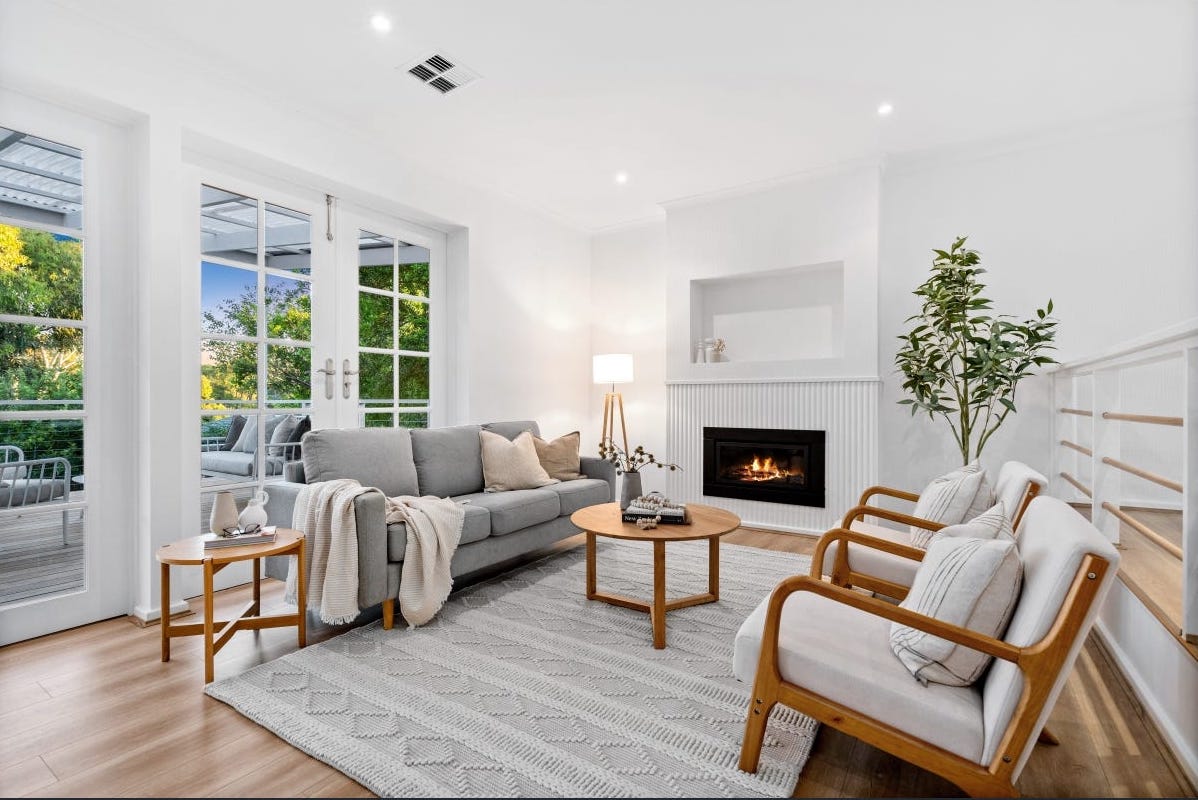
A built-in fireplace is a unit designed to sit inside a wall cavity rather than freestanding on the floor. The frame, hearth, and finishes are built around it during construction or renovation. The result is a flush or recessed feature wall with no cabinet protruding into the room. In Australia, built-in fireplaces are also called inbuilt fireplaces, and the two terms mean the same thing.
The three common fuel types are gas, electric, and wood. Each behaves differently in a built-in installation. Wood is the most complex because it needs a flue and clearances that few modern renovations are designed for. Gas is the most common choice for new wall cavities in living rooms. Electric is the most flexible because it needs only a power point or hardwired circuit.
The size, weight, and clearance requirements depend on the model. A typical inbuilt gas log fire weighs between 60 and 150 kilograms and needs a cavity sized to the manufacturer's specifications. An electric inbuilt is lighter and tolerates a tighter fit. The fireplace dimensions come first, and the cavity is built to match.
Decision 1: gas, electric, or wood?
The fuel decision shapes everything that follows. If you've made it already, treat this section as a refresher. If you haven't, here's how most renovators think it through.
| Fuel | Suits | Install requirement | Heat output |
|---|---|---|---|
| Gas log | Larger living rooms in homes with mains gas | Licensed gasfitter and a flue | 4 to 8 kW |
| Electric | Apartments, bedrooms, any room without gas | Power point or hardwired circuit | 1.0 to 2.0 kW |
| Wood | Renovations with chimney access and council approval | Flue planning and clearances | Typically 6 to 14 kW |
Gas log fireplaces produce a real flame and meaningful heat. They run on natural gas or LPG and are the most common choice for new wall cavities in living rooms. The trade-off is the install: a licensed gasfitter is required, and the flue route has to be planned before the wall is closed.
Electric fireplaces are the most flexible option. They need only a power point or a hardwired circuit, depending on the model. The flame is generated by LED technology, and modern units like our Velisse Aura range produce a three-dimensional flame effect that's a long way from the old flat orange light. Heat output is lower than gas, which suits smaller rooms and apartments.
Wood-burning inbuilts are still possible in renovations but need chimney planning, council approval, and clearances that most modern open-plan extensions can't accommodate. Sister site Ultimate Fires covers the wood heater side in more depth if you're considering it.
For a fuller comparison of gas options, our guide on choosing the right gas log fireplace covers product types in detail. For electric, see our guide on how to choose an electric fireplace.
Decision 2: how big should the cavity be?
The fireplace dimensions come first, and the cavity is built to match. This is the decision where renovators most often get burned, and where building a wall to a generic "fireplace-sized" hole creates expensive problems later.
Inbuilt gas log fireplaces vary by model. As a rough guide, smaller units sit around 700 to 900 millimetres wide, mid-size units run 950 to 1,250 millimetres wide, and larger units reach 1,400 to 1,500 millimetres wide. Heights typically sit between 600 and 900 millimetres, and depths between 300 and 450 millimetres. Every model has its own specification sheet, and the cavity needs to follow that sheet exactly, including clearance allowances above and beside the unit.
Inbuilt electric fireplaces are smaller and shallower. The Velisse Aura range fits cavities in the 600 to 1,200 millimetre wide range with depths under 200 millimetres. The clearances are simpler because the units run cooler.
Beyond the unit dimensions, the cavity needs to accommodate:
- Combustible material clearances. Gas units have stricter requirements above the firebox, where heat rises. The manufacturer's specification sheet sets the minimum distance from the top of the unit to any timber framing or plasterboard.
- A non-combustible hearth or floor plate. Required for gas, and in many cases for electric as well.
- The flue path. Gas units need either a balanced flue out the back wall or a vertical flue rising through the roof. The flue route has to be planned before the wall is closed.
- Power, gas, and ignition wiring. These need to be roughed in before plasterboard goes up.
- A beam or lintel above the cavity. The opening has to be structurally framed, and the beam size depends on the load above.
This is where Illusion's manufacturing position helps. Every unit is made in our Melbourne factory and carries a 10-year firebox warranty, so the cavity you build today is being sized for a fireplace that will sit in the wall for decades. The dimensions on the spec sheet are the dimensions to build to. Guessing produces expensive problems.
Decision 3: what finishes work around the unit?
The finishes are the part you and your designer have probably spent the most time thinking about. They have technical limits set by the fireplace inside the wall. Tile, stone, render, and timber surrounds all work around built-in fireplaces, and each has rules.
For gas units, the wall above the unit gets warm during operation. Manufacturer specifications set how close combustible materials can sit above the firebox, and many designs require a non-combustible heat shield in the zone directly above. If you're planning a timber mantel, the bottom edge has to clear the manufacturer's required distance from the top of the firebox.
In Melbourne open-plan extensions, the fireplace often sits on the wall opposite the kitchen island. The sight lines from the kitchen drive the height the unit needs to sit at. That height feeds back into where the cavity opening goes and how the finishes are sized around it. Working through this with the designer before framing means the unit ends up centred on the line you'll see from the kitchen seating, rather than the line that happened to suit the framing carpenter.
If you're mounting a television above the fireplace, the rules tighten. Gas log fireplaces produce radiant heat that can damage electronics over time. Some Illusion inbuilt models are designed with internal venting that pushes heat sideways rather than straight up, which makes the TV-above arrangement workable. Other models aren't suited for it. Check the model specification before you commit to the layout.
For electric units, the finishes rules are much simpler. The cabinet runs cooler, the heat is concentrated at the air vents rather than the surround, and most modern materials work with minimal clearance.
What gets locked in too late to change cheaply
The expensive mistakes in a built-in fireplace project share a pattern. They happen when the cavity is built before the fireplace is chosen, and the chosen fireplace doesn't fit. Three of the costlier ones to fix after the wall is closed:
- Re-routing a gas line that was roughed in to the wrong point. Typically $800 to $1,500 for a licensed gasfitter to extend or reposition the line.
- Cutting through finished plaster to install a flue that wasn't planned in advance. Around $500 to $1,000 for the flue install, plus the cosmetic repair to the wall and ceiling.
- A structural beam over the cavity sized to the wrong opening width. Once finished, this can mean opening the wall, replacing the beam, and rebuilding the framing around it. Costs vary widely but often start at $3,000 and climb from there.
Smaller variations of the same problem are common: an electrical circuit on the wrong side of the unit, a flue penetration that clashes with a roof beam, a hearth too shallow for the chosen model. None of these are catastrophic, and each one costs money and time. The single best protection is to choose the fireplace before the wall is framed.
Which trades to involve, and in what order
The order matters. The right sequence keeps each trade working from confirmed information and stops them from having to redo work later.
- Architect or designer. They lock in the wall position, the cavity location, and the overall room layout.
- Fireplace supplier. This is where Illusion Fires enters the picture. Bringing the floor plan to a showroom consultation at this stage means the chosen unit's dimensions can be confirmed against the planned cavity before any trade starts work. Our factory-direct model means you're talking to the people who design and build the unit, with the spec sheet in front of you.
- Licensed gasfitter with Type A endorsement. Required for gas installations under AS/NZS 5601.1:2022 (with Amendment 2 from September 2024). They rough in the gas line position and confirm the flue route.
- Electrician. Roughs in power for ignition, fan operation, and any electric fireplace circuits.
- Framing carpenter. With cavity dimensions, flue route, gas line position, and power locations confirmed, framing can proceed.
- Plasterer, tiler, and finishers. The cosmetic trades work last and follow the constraints already set by the fireplace and its clearances.
The fireplace supplier sits second for a reason. Confirming the unit before framing means the gasfitter, electrician, and framer all work from the same specification sheet.
Bring your floor plan to a showroom before framing starts
The strongest move a renovator can make at this stage is to walk into a showroom with the floor plan and have the consultant size a real product against the planned cavity. Spec sheets are downloadable, but the decision is more concrete with the unit in front of you than on paper.
Illusion Fires has showrooms across Melbourne (Dandenong, Epping), regional Victoria (Geelong, Ballarat), Adelaide, Perth, Sydney, and Newcastle. Every showroom has working models on display, including the inbuilt gas range and the Velisse Aura electric range. You can see the dimensions, the flame quality, and the heat output before you commit. Bring the floor plan, the wall measurements, and any restrictions the architect has flagged. The consultation is free, and the unit you choose is made in our Melbourne factory and backed by a 10-year firebox warranty.
If your project involves an existing fireplace rather than a fresh wall cavity, our guide to converting an old fireplace covers the related decision for buyers working with what's already there.

Leave a comment
This site is protected by hCaptcha and the hCaptcha Privacy Policy and Terms of Service apply.