
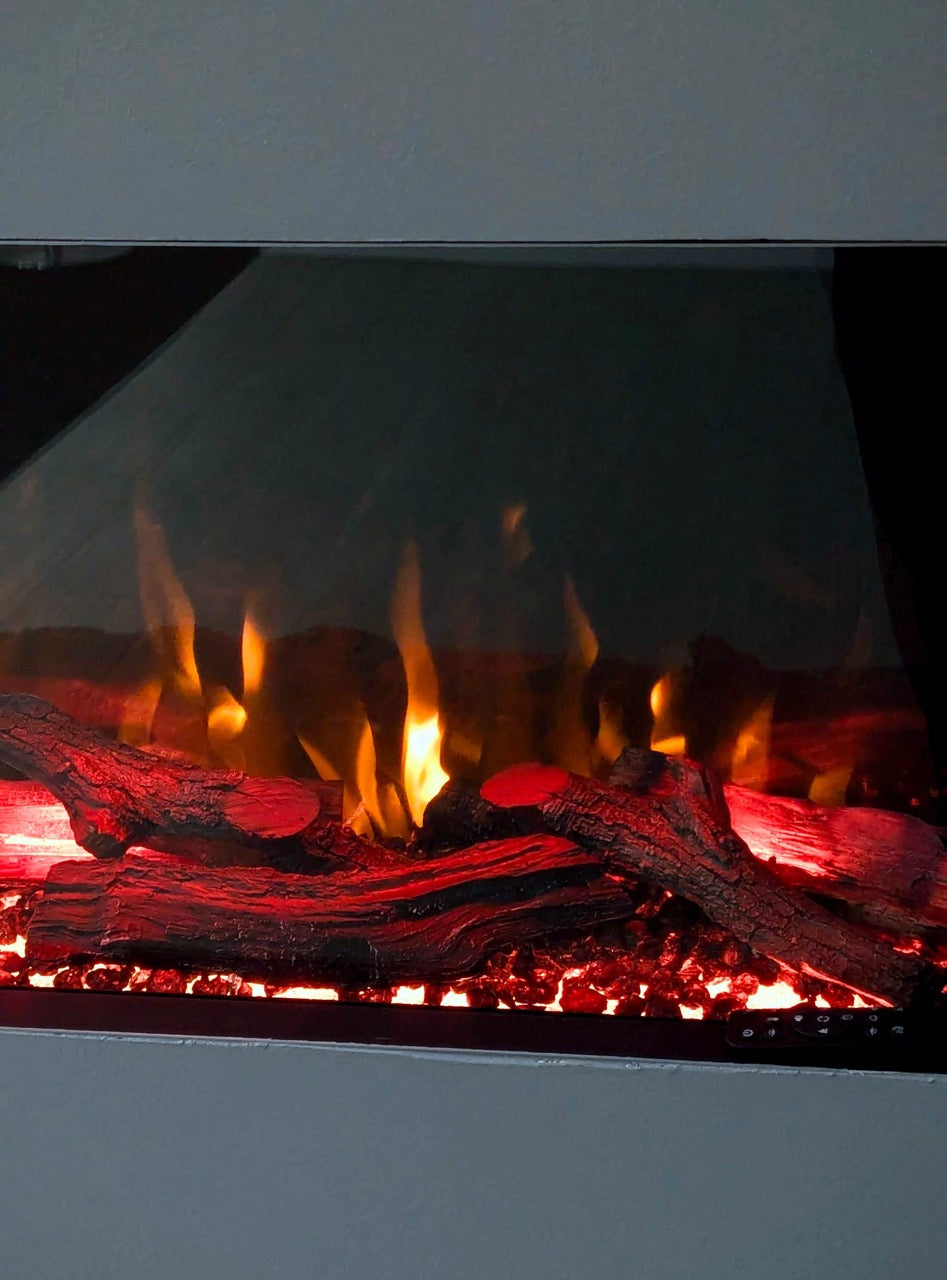

The first properly cold night of the year always catches people out. You press the button on the fire on your way past to the kitchen. Nothing. You press it again and hear a click, then another click, then quiet.
A gas log fire that will not light usually comes down to one of three things. The gas supply is off or interrupted. The ignition system has worn out. Or a safety device has shut the fire down on purpose. There are five checks a homeowner can safely make. Everything past those is work for a licensed gasfitter, and in Victoria that is law rather than preference.
What to check when your gas log fire won’t light
These five checks take about ten minutes. None of them need tools, and none of them involve opening the fire.
- Try another gas appliance. If the cooktop lights, gas is reaching the house and the problem sits at the fire.
- Find the isolation valve on the gas line near the fire and check that it is open.
- On bottled LPG, check the bottle. A bottle that runs dry mid winter gives no warning.
- Change the batteries in the remote handset. Most Illusion handsets take three AAA batteries.
- Check the power point if your fire has a fan or a remote receiver fitted.
One more thing explains a lot of failed relights. These fires have a restart interlock built in. After a flame goes out, the interlock blocks ignition until the safety valve has stopped the gas completely. Try again too soon and nothing happens. Wait a few minutes, then try once more.
The receiver batteries are a different matter. The receiver box sits behind the fascia. The manual says the gas must be shut off before anyone works on it. That makes it a job for a technician, even though the handset batteries are a two minute swap.
What each symptom usually means
Gas log fires fail in patterns. What you can see from the couch usually points to one component, and five components cause most no-light faults.
| What you see | The part involved | What that part does |
|---|---|---|
| Clicks, but no flame catches | Piezo igniter | Makes the spark that lights the pilot |
| Pilot lights, then dies straight away | Thermocouple | Senses the pilot and holds the gas valve open |
| Pilot stays lit, main burner will not come on | Thermopile | Powers the valve that feeds the main burner |
| Fire runs, then shuts off after about 30 minutes | Thermopile, or the remote timer | Check the timer setting before assuming a fault |
| No spark, no click, nothing | Gas supply or gas valve | The valve controls gas to both the pilot and the burner |
| Flames lift off the burner, or logs turn black | Gas pressure or log position | Both change how completely the gas burns |

The pilot assembly ties several of these together. It holds the pilot burner, the igniter rod and both sensors in one unit. Where a technician cannot isolate a single failed component, the whole assembly is usually replaced.
The parts themselves are not expensive. A thermocouple is $100 and a thermopile is $100. A piezo igniter is $70. A full pilot assembly is $200, and a gas valve is $300. In most no-light jobs, the labour costs more than the part.
In most no-light jobs, the labour costs more than the part.
One cause sits outside the fire entirely. Say a new gas appliance went in after the fire, such as an instantaneous hot water system. The mains pipe may now be undersized for both. The fire lights, then drops out when the other appliance draws gas. A gasfitter can check the pipe sizing.
When to stop and call a gasfitter
The line is simple. Anything that involves removing a panel, touching a gas fitting or working near the burner is licensed work.
Do not dismantle the fire. Do not adjust the gas valve. Do not bypass a safety device to get one more evening out of it. A safety device that shuts the gas off is doing the job it was fitted to do. Treat it as information.
A safety device that shuts the gas off is doing the job it was fitted to do.
If you can smell gas, stop. Turn the gas off at the isolation valve or the meter and leave the building. Do not touch a light switch, a phone or any other electrical switch on the way out. Make the call from outside the house.
Three other signs mean the fire goes off and the phone comes out. Flames that lift away from the burner. Logs that turn black and sooty. Any smell of flue fumes in the room, which can point to a blocked flue.
Energy Safe Victoria warns that any gas heater can spill carbon monoxide, and decorative log fires are on that list. Carbon monoxide has no colour and no smell. Energy Safe Victoria also sets who may do the work. Servicing a gas log fire needs a gasfitter registered in the Type A appliance class. A full service includes a carbon monoxide test with an analyser.
What does a gas log fire service cost?
A standard gas log fire service in Victoria commonly runs $150 to $400, with parts on top of that. Melbourne gasfitters charged roughly $105 to $210 an hour through 2026, and most add a call-out fee. A straightforward no-light fault is usually one visit.
A proper service is more than a look and a light. The technician checks gas pressure at the valve test points against the figures on the compliance plate. They test for carbon monoxide spillage. They clear lint and house dust out of the burner and control compartment. They check the flue, and they watch the flame pattern on both the high and low settings. Log position gets checked too, because a log sitting over a burner port causes sooting.
Gas work in Victoria comes with a certificate of compliance. Ask for it and keep it.
On timing, two sources matter and they differ. The Illusion owner’s manual calls for an authorised person to inspect the appliance and flue every year. Energy Safe Victoria recommends every gas heater be serviced at least every two years. A fire that carries the heating load all winter is better served on the annual cycle.
Common questions
Why does my pilot light keep going out?
The thermocouple is the usual answer. It sits in the pilot flame and holds the gas valve open while it stays hot. As it ages it stops making enough signal, and the valve closes. A draught across the pilot or low gas pressure can do the same thing. All three need a gasfitter.
Can I relight the pilot myself?
Your model’s manual sets out the lighting steps for that unit, and those steps are the only ones to follow. Do not improvise and do not light anything by hand. If the pilot will not hold after two attempts, stop and book a service. Repeated attempts on a fire with a failing safety device achieve nothing.
Is an older gas log fire worth repairing?
Usually yes. The wear parts are stocked and cheap, and the firebox carries a ten year warranty from the date of purchase. A fifteen year old unit with a failed thermocouple is an inexpensive fix. Replacement makes more sense when the firebox or the flue is the problem. It also makes sense once a model is old enough that parts have run out.
Fires that will not light in May have often sat untouched since September. Dust settles in the burner and the control compartment across eight warm months. The first cold night is when that shows up.
The service queue is worth understanding too. Bookings sit low through spring, climb from the first cold snap, and stay banked up through July. A check booked in March or April gets a technician out within days. The same fault found in the middle of July joins a queue.
So book the service before the first cold night rather than after it. If a technician has already named the failed part, you can order it straight from the spare parts range. Showrooms across Victoria, South Australia, Western Australia and New South Wales can confirm which part suits your model.

Leave a comment
This site is protected by hCaptcha and the hCaptcha Privacy Policy and Terms of Service apply.