
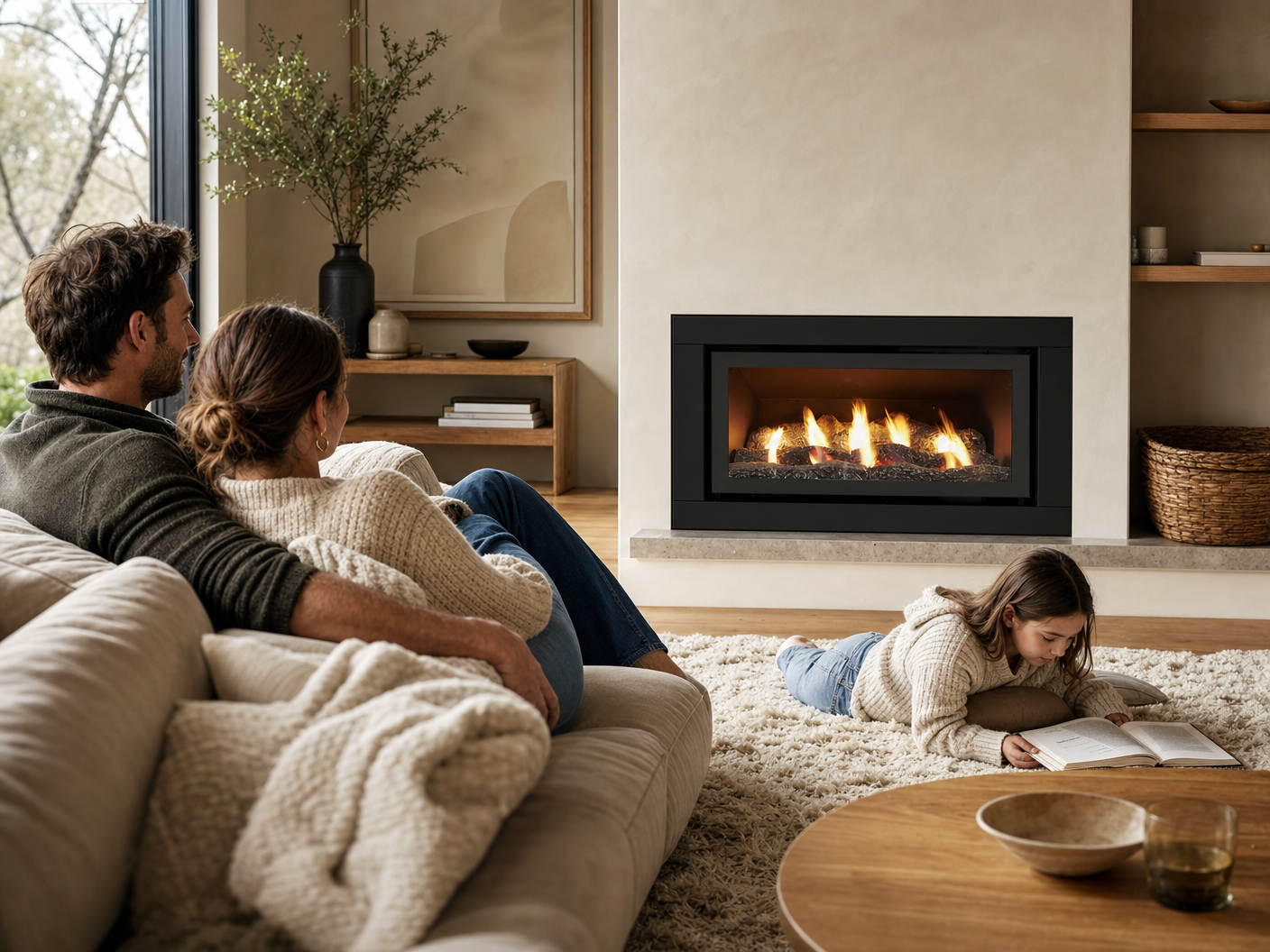
The plans are spread across the kitchen table and the living room wall is still a blank rectangle. Your builder has mentioned that the gas rules are changing. Nobody has explained whether that means you, or whether the fireplace you had in mind is still allowed.
Here is the short answer. If you own an existing Victorian home, you can still put in a gas fireplace. Install a new one, repair the one you have, or replace it. If you are building new, the date on your building permit decides it. A permit issued on or before 31 December 2026 can still connect to gas. From 1 January 2027, every new home in Victoria must be built all-electric, with no new gas connection.
The rules come from Victoria's Gas Substitution Roadmap and the Building and Plumbing Amendment Regulations 2025. Here is what each one means for a fireplace.

Can you still install a gas fireplace in an existing Victorian home?
Yes. If your home is already built and already has gas, nothing stops you putting in a gas log fire.
Existing owner-occupied homes are not affected for space heating. You can add a gas fireplace where there was none. You can repair a unit that has stopped working. You can replace an old fire with a new one. Gas cooking is untouched as well.
Renovations and extensions keep the existing gas connection. Adding a room or reworking a floor plan does not trigger the new-build rule. That rule covers new dwellings only.
One point causes more confusion than the rest. From 1 March 2027, gas hot water in an existing home must go electric at end of life. That rule covers hot water. It does not touch your fireplace, your heater, or your cooktop.
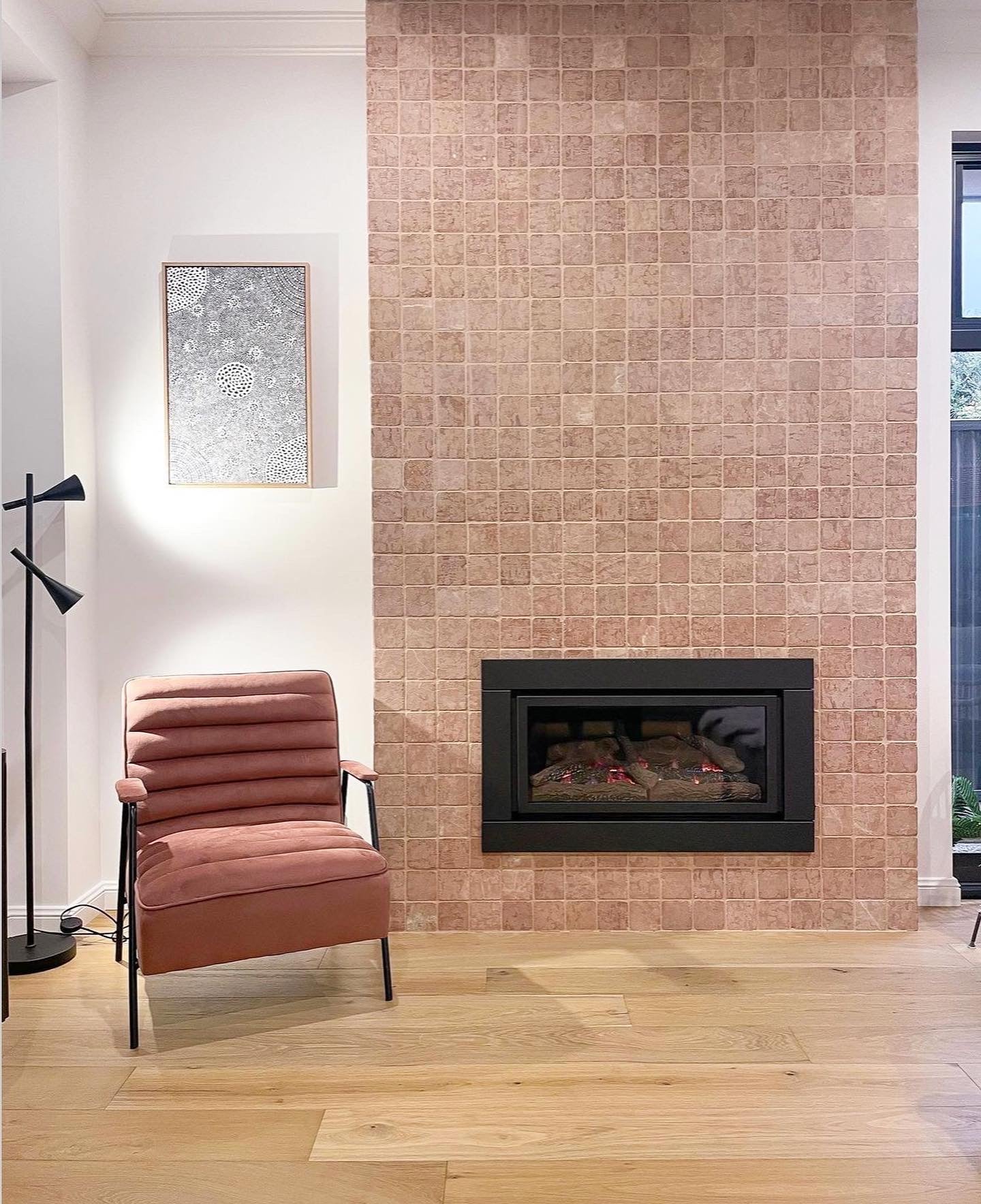
Installing or replacing a gas log fire is licensed gasfitter work either way. Domestic gas log fireplaces are Type A appliances. The work must meet AS/NZS 5601.1:2022, the Australian and New Zealand gas installation standard. That standard is kept current through regular amendments.
What changes for new homes from 1 January 2027
From 1 January 2027, all new homes in Victoria must be built all-electric. A building surveyor cannot issue a permit for a new home that connects to mains gas. No new gas connection means no gas log fire.
What counts is the date the building permit is issued. The date you signed with your builder makes no difference. A permit issued on or before 31 December 2026 can still include gas.
What counts is the date the building permit is issued.
This closes a gap open since 2024. New homes needing a planning permit have had to be all-electric since 1 January 2024, under Amendment VC250. Most standard single homes never need a planning permit, so they sat outside that rule. From 2027 the requirement moves into the building permit system and covers the lot.
A knock-down rebuild counts as a new home. Demolish a house that had gas, build again, and the new house cannot be reconnected.
In the growth corridors north and west of Melbourne, estates are being released now and built through 2026. That timing is tight.
The three dates worth writing down:
- 1 January 2024: new homes that needed a planning permit already had to be all-electric
- 31 December 2026: the last day a building permit can be issued with a gas connection
- 1 January 2027: all new homes must be all-electric, whatever permits they need
What the rules mean if you rent out the property
Rental properties have their own timetable, and it is stricter than the owner-occupier one.
New minimum energy efficiency standards start for Victorian rental homes on 1 March 2027. A heating or hot water appliance that dies and cannot be repaired must be replaced with an efficient electric system. For heating, that means a reverse cycle air conditioner in the main living area. For hot water, a heat pump.
For an investor the effect is simple. A gas heater in a rental can keep running. Once it dies, the replacement has to be electric.
A gas heater in a rental can keep running. Once it dies, the replacement has to be electric.
Exemptions apply where compliance is impractical or costly. Apartments with shared ceiling space or centralised heating are the common examples.
Does the gas ban apply to your home?
Find your situation below.
| Your situation | Can you install a gas log fire? | What decides it |
|---|---|---|
| Existing home you own | Yes | Nothing changes. Repairs and replacements are fine too. |
| Renovation or extension | Yes | The existing gas connection stays with the dwelling. |
| New build, permit issued by 31 December 2026 | Yes | The date the permit is issued. |
| New build, permit issued from 1 January 2027 | No | An electric fireplace is the option. |
| Knock-down rebuild from 2027 | No | The old connection cannot be reinstated. |
| Rental property | Yes for now | From 1 March 2027 an end-of-life heater goes electric. |
| Home running on LPG | Yes | Bottled gas sits outside these rules. |
LPG is worth a closer look. Plenty of homes in regional Victoria and outer Melbourne never got mains gas. A gas log fire running on LPG stays available to them. Confirm it with your building surveyor before the permit goes in. The surveyor signs it off.
If you are building new, what are your options?
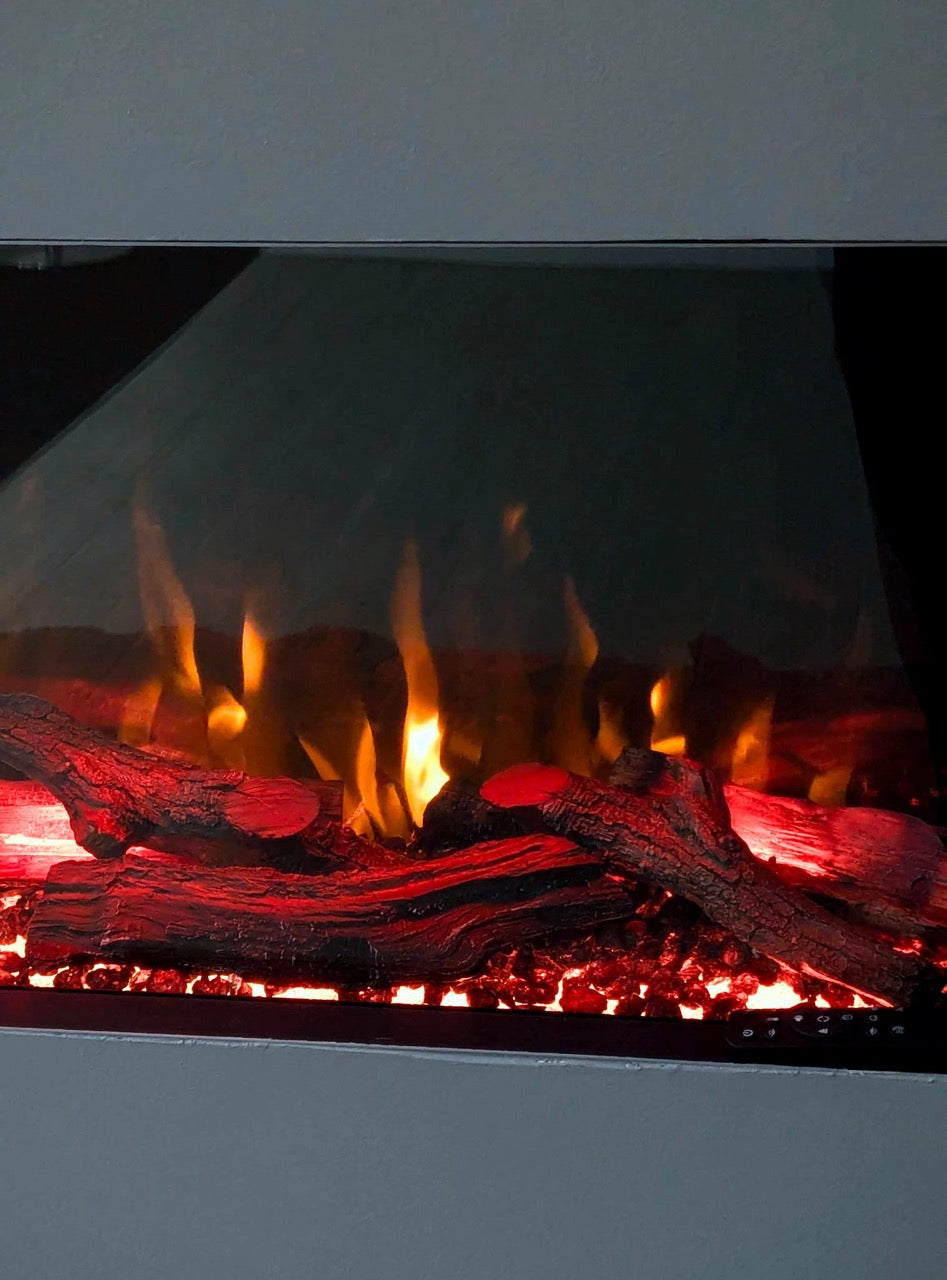
If your permit lands in 2027, the fireplace has to be electric. The Velisse Aura range runs on power alone. There is no flue, no gas connection and no combustion, so it suits a house with no gas at all. It mounts on the wall or sits recessed into it, and a licensed electrician does the connection.

Be clear about what that means for heat. A typical electric fireplace draws around 2 kilowatts and warms roughly 20 to 25 square metres. A gas log fire such as the Luminar 3000 is rated to heat up to 80 square metres. Electric will hold a bedroom, a study, or a small sitting room. It will struggle to carry an open-plan living and dining space.
New Victorian homes are built to a 7-star energy rating and sealed better than older stock. That narrows the gap without closing it. Where the fire is the main heat source for a large room, plan for a reverse cycle system too. Let the fire do the ambience.
An electric fire is chosen for the look, the flame, and the warmth close by. In an all-electric home it is the only fireplace on offer.
Frequently asked questions
Does this apply outside Victoria?
No. These rules are Victorian. South Australia, Western Australia and New South Wales each set their own building and energy rules. None has a matching all-electric requirement for new homes. If you are building interstate, check the current position with your local building surveyor.
Does the ban cover LPG?
No. The rules target new mains gas connections. Bottled LPG is not covered, and both new and existing homes can still use it. Have your builder confirm the approach with the building surveyor early, since it forms part of the permit documents.
Does the 2027 change affect my gas hot water?
That is a separate rule. From 1 March 2027, gas hot water in an existing home goes electric at end of life. Space heating in existing homes is not covered. The two changes get reported together, which is where the confusion starts.
My building permit is already lodged. Where does that leave me?
If the permit is issued on or before 31 December 2026, gas can still be connected. Lodged and issued are not the same thing. Ask your builder for the expected issue date, then work backwards and allow for delays.
What to sort out before the permit goes in
One detail decides more of these builds than the regulation does. A gas log fire has to appear on the drawings before the permit application is lodged. The flue penetration, the gas run and the wall cavity all form part of the documents the surveyor assesses. It is not a fit-out choice you can make later, once the frame is up.
That is the pattern behind most of the buyers who miss out. They did not choose the wrong fireplace. They left it to the end of the build. By then the permit had settled the question for them.
Want gas, with a permit due before the end of 2026? The fireplace belongs in this month's conversation with your builder. If your permit will land in 2027, the decision moves to which electric unit suits the room.
Either way, seeing both running side by side settles it faster than a spec sheet does. Illusion Fires showrooms across Victoria, South Australia, Western Australia and New South Wales have both on display. Bring your room dimensions and a copy of the plans.

Leave a comment
This site is protected by hCaptcha and the hCaptcha Privacy Policy and Terms of Service apply.