
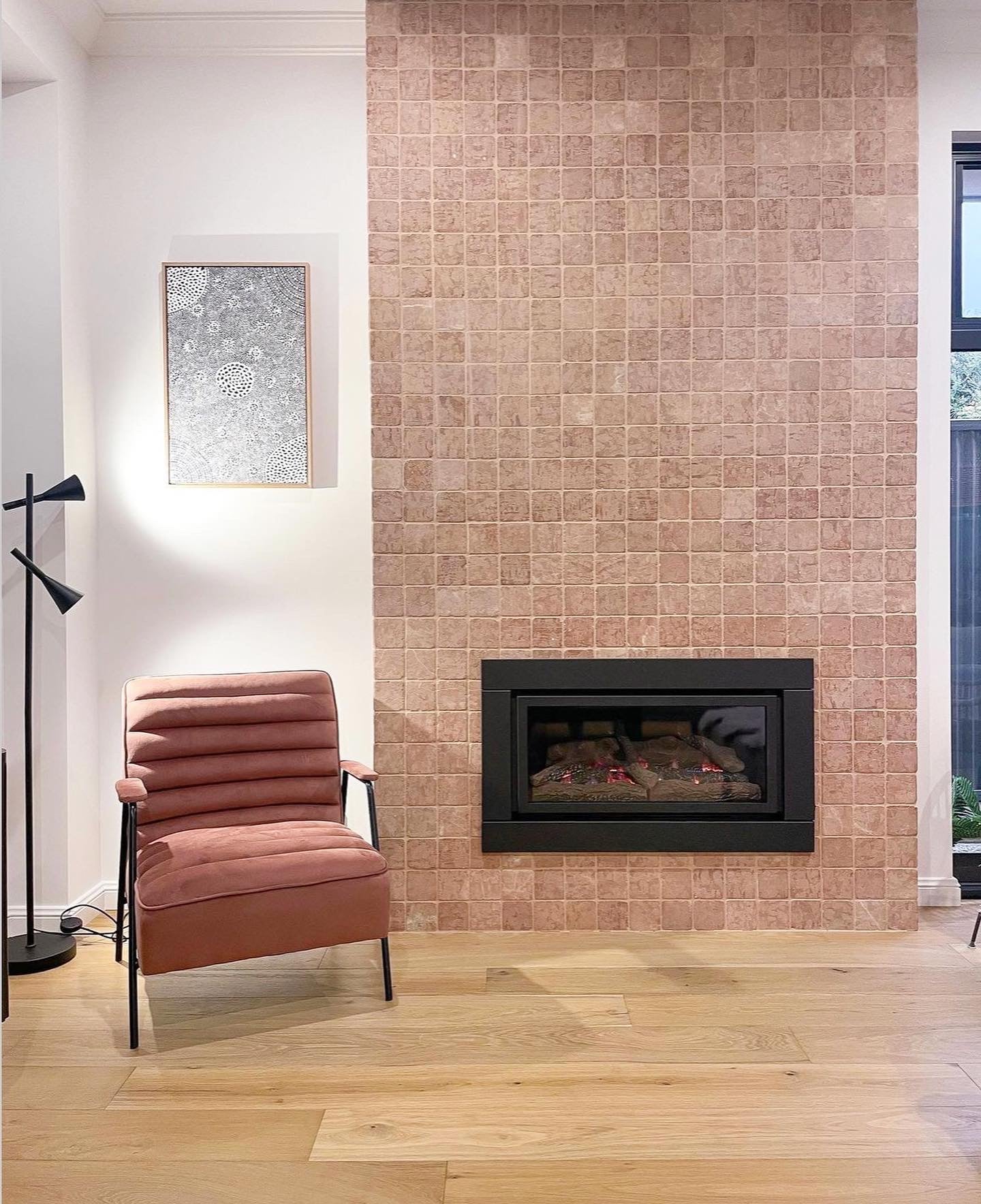
You have pulled the throw rug over your knees for another Melbourne winter, and the ducted heating still takes an age to warm the lounge. A gas log fire would fix that. You have decided you want one. The hard part is knowing where to start with gas log fires in Melbourne: inbuilt or freestanding, what they cost, and what has to be sorted first.
Here is the short version. A gas log fire is a sealed heater that burns natural gas or LPG behind glass, over ceramic logs. It gives you a real flame and steady heat at the touch of a remote. In most Melbourne homes, a quality unit supplied and installed sits between $3,000 and $10,000. Where you land depends on the fire you pick and how involved the install is. It has to be fitted by a licensed gasfitter. Illusion Fires designs and makes its gas log fires in Melbourne. The rest of this guide walks through the choices a local buyer needs to make.
What is a gas log fire, and how does it work?

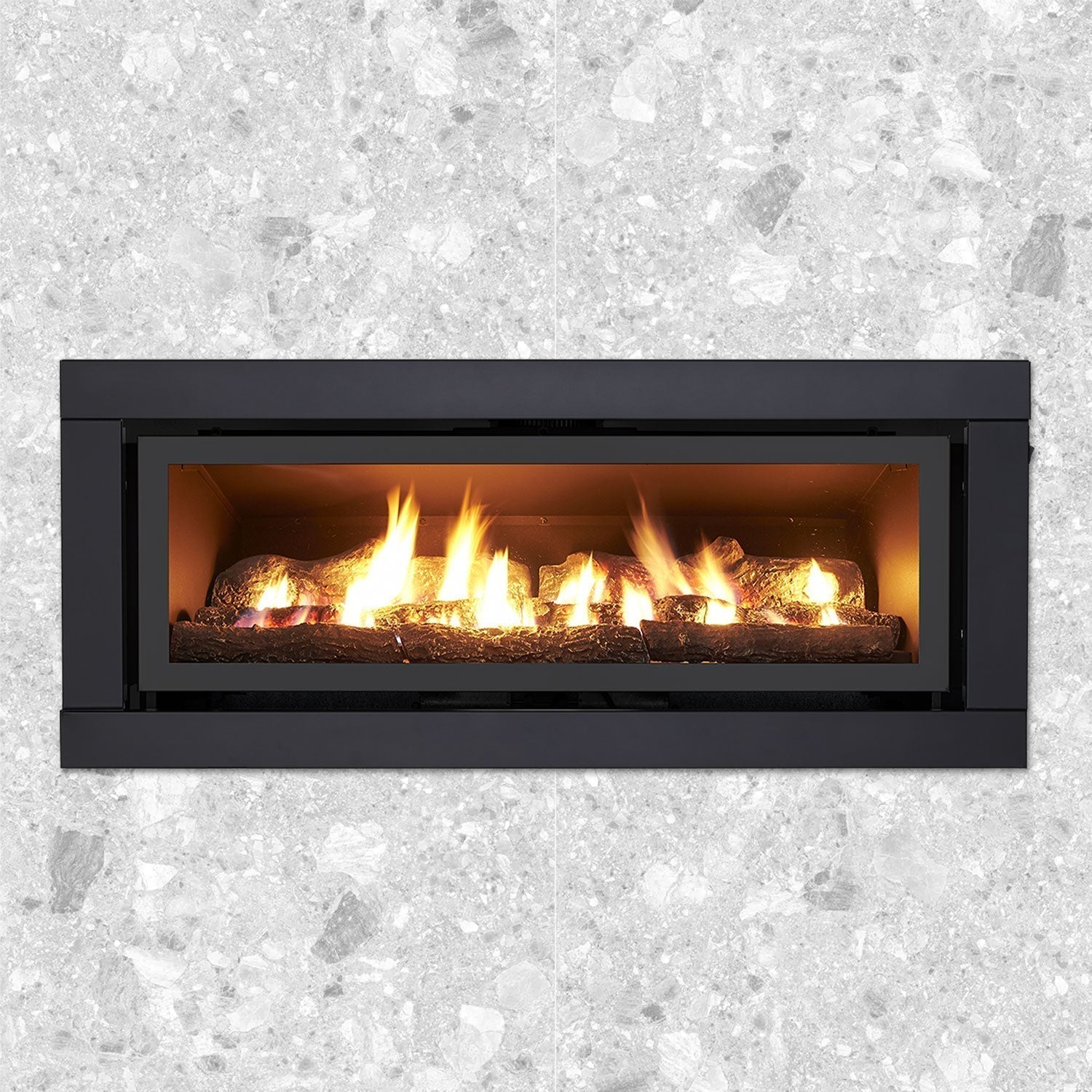
A gas log fire is a heater that burns gas over a set of ceramic logs to produce a real flame behind a glass front. It runs on natural gas from the mains, or on bottled LPG. You control it with a remote or a wall switch. There is no wood to cart in, no ash to clean out, and no waiting for kindling to catch. Most ranges let you choose the look inside the firebox too. You can pick log sets or pebbles, and a fascia colour to suit the room.
Most modern units use a balanced flue. A balanced flue is a sealed system that draws air from outside through one pipe and vents the exhaust outside through another. It does not pull air from the room or need a traditional chimney. That makes it a good fit for tight, draught-proofed homes, where an open fire would struggle. In Australia, a domestic gas log fire is what the standards call a Type A appliance, and it is built to run sealed like this.
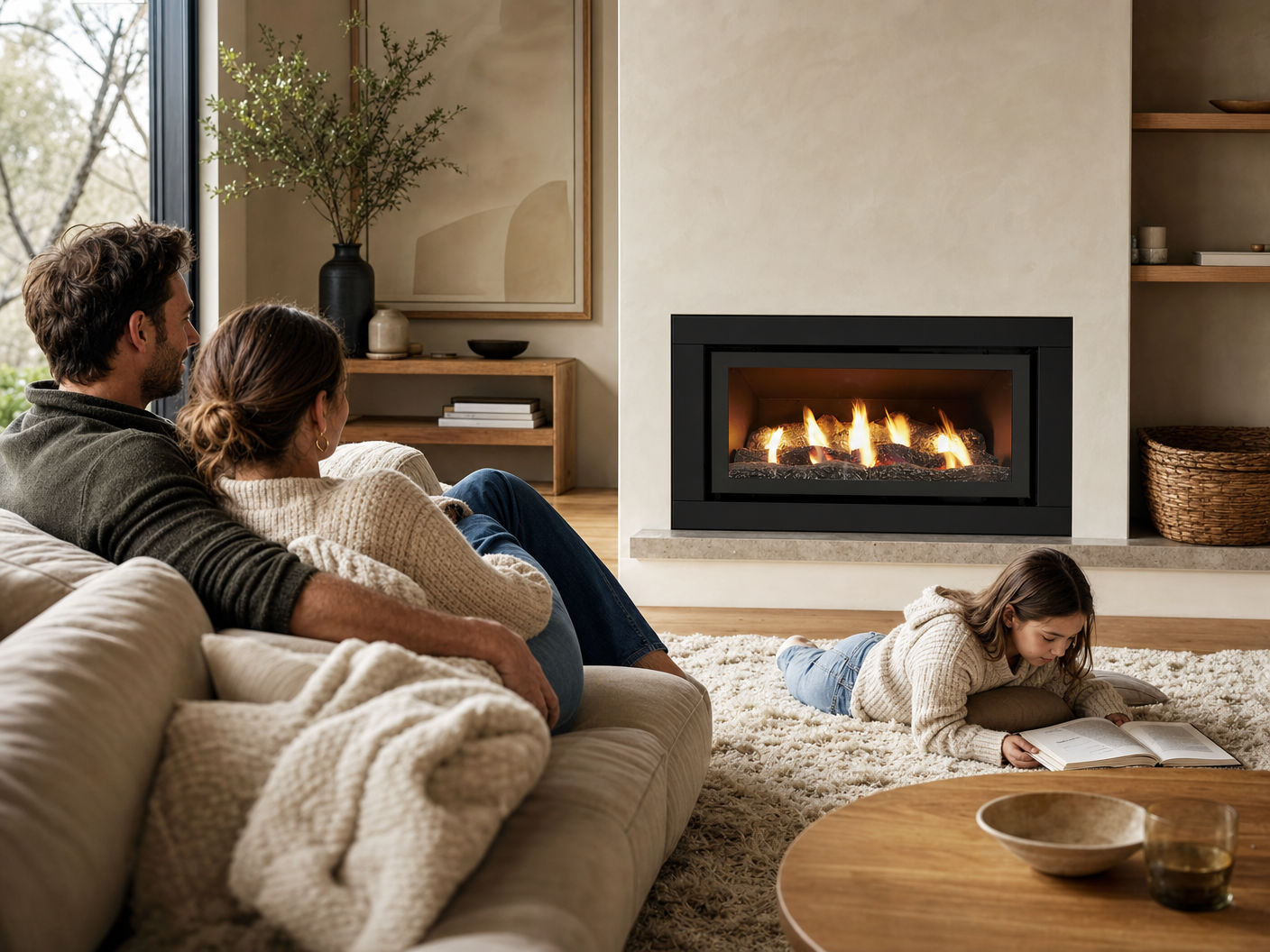
The appeal is control. You get warmth on demand, a flame you can turn up or down, and a clean unit that stays put once it is in. For a lot of buyers, that is the whole reason to choose gas over wood.
How much do gas log fires cost in Melbourne?
Most gas log fires cost between $3,000 and $10,000 supplied and installed. The fire itself is usually the smaller part of that. A unit commonly runs from around $2,500 to $5,000, and the rest is the installation.
A few things move the price:
- The unit. Larger fires and wide linear models cost more than compact inserts.
- Inbuilt or freestanding. Building a fire into a wall cavity is more work than standing one on a hearth.
- Your gas supply. If there is no gas line where the fire will go, running one adds cost, often in the $500 to $2,000 range.
- The building. A single-storey home with easy roof access is simpler than a double-storey terrace with a long flue run.
- The starting point. Dropping a fire into an existing masonry chimney is different work to cutting a new cavity in a plaster wall.
Buying factory-direct means the price you see comes from the maker, without a separate retailer's margin stacked on top. For a full breakdown of what an install involves, see the installation cost guide. For what a fire adds to your gas bill, see the running cost guide.
Inbuilt or freestanding: which suits your space?

The first real decision is whether the fire sits inside the wall or stands in the room.
An inbuilt gas log fire is built into a wall or an existing cavity, so the glass sits flush with the surface. It reads as part of the room, which is why it is the usual pick for a renovation or a new build. A freestanding gas log fire sits proud on the floor and becomes a feature in its own right. It works well where there is no cavity to build into. It also suits a room you want to arrange around the fire.
| Factor | Inbuilt gas log fire | Freestanding gas log fire |
|---|---|---|
| Where it sits | Built into a wall or cavity, glass flush | Stands proud on the floor or a hearth |
| Best for | Renovations and new builds | Rooms with no cavity, or a bold focal point |
| The look | Blends into the wall | A feature in its own right |
| Wall work | Needs a cavity or existing opening | No cavity needed |
Size matters more than most buyers expect. A fire matched to the room heats it evenly. Push an oversized unit into a small sealed space and you end up running it low to stop the room baking. A fire run low burns dull, and over time it can mark its own glass. Ceiling height and open-plan layouts change the sum as well. A high raked ceiling, or a room that flows into the kitchen, has more air to heat. Rather than guess, check the square-metre figure each model is rated for against your actual floor area. Our sizing guide walks through that, and you can compare the current inbuilt and freestanding ranges on their collection pages.
What to check before you buy
Before you settle on a fire, run through a short list.
- Gas supply: Confirm whether your home is on natural gas or will need LPG. Most models come in both, but each unit is set up for one or the other. Settle this before you order.
- Who installs it: A gas log fire must be installed by a licensed gasfitter, who issues a compliance certificate for the work. The install is done to AS/NZS 5601.1, the Australian gas installation standard, which is kept current through regular amendments. This is not a job to attempt yourself.
- Warranty: Check what the firebox warranty covers and for how long. The firebox is the steel chamber the fire burns in. It takes more heat stress than any other part, so a long warranty on it is the one that matters. Illusion backs its fireboxes for ten years.
- Safety: Any gas heater needs to be installed and serviced correctly to burn safely. Energy Safe Victoria recommends having gas heaters checked by a licensed gasfitter so they run cleanly and vent properly. A well-installed balanced-flue fire sends its exhaust straight outside.
Running costs and servicing
As a rough guide, most gas log fires cost between $0.70 and $1.80 an hour to run on natural gas. Where you land depends on the size of the fire and your gas rate. That is the gas you burn only. Your daily supply charge applies whether or not you have a fire. The running cost guide breaks this down by fireplace size.
On upkeep, plan on a service by a licensed gasfitter every couple of years. A proper service covers the burner, the log set, the flue and a carbon monoxide check. That keeps the fire safe and efficient, and keeps the warranty intact.
Gas log fires in Melbourne: common questions
Do you need a permit to install a gas log fire in Melbourne?
You do not need a council planning permit for a standard gas log fire in an existing home. What you do need is a licensed gasfitter, who issues a compliance certificate for the gas work once the job is done. If the fire is part of a larger building project, that project may carry its own approvals.
Can you convert an old open fireplace to a gas log fire?
Often, yes. An existing masonry fireplace is a common spot to fit an inbuilt gas log fire. The old open chimney is usually sealed and flued rather than reused. Your gasfitter checks the opening, the flue path and the clearances on site before quoting.
Does Victoria's gas phase-out affect putting in a gas log fire?
If your home is already on gas, the changes do not stop you installing or using a gas log fire. Under Victoria's Gas Substitution Roadmap, existing gas space heaters are not being phased out. The locked-in changes target new builds. From 2027 they also cover gas hot water at end of life. Space heaters in existing homes are left as they are. New homes that need a planning permit have had to be all-electric since 2024, so a mains-gas fire is not an option there. LPG is not affected either way.
What if your home isn't connected to natural gas?
You can still have a gas log fire on LPG, run from bottles. Plenty of homes across outer Melbourne and regional Victoria run this way. The fire is ordered in its LPG configuration, and you factor in bottle supply.
How long does a gas log fire installation take?
A straightforward inbuilt or freestanding install is often done in a day. It takes longer if a new gas line is needed. A long flue run, or wall and hearth work, will also add time. Your installer can give you a firmer timeframe once they have seen the space.
Come and see one running
The best way to land on the right fire is to see a few in person and talk through your room. Bring a photo of the wall you have in mind, plus the room's rough measurements. A consultant can then steer you to the units that fit and rule out the ones that do not. Illusion has showrooms across Victoria, South Australia, Western Australia and New South Wales. Every one carries the range in the metal rather than as a brochure.
One last thing worth knowing. Because the fireboxes are built in Melbourne, replacement parts are stocked here rather than shipped in from overseas. A new unit also reaches you faster than an imported fire waiting on a container. That is the practical side of the ten-year firebox warranty: the parts to honour it are already in the country.

Leave a comment
This site is protected by hCaptcha and the hCaptcha Privacy Policy and Terms of Service apply.