
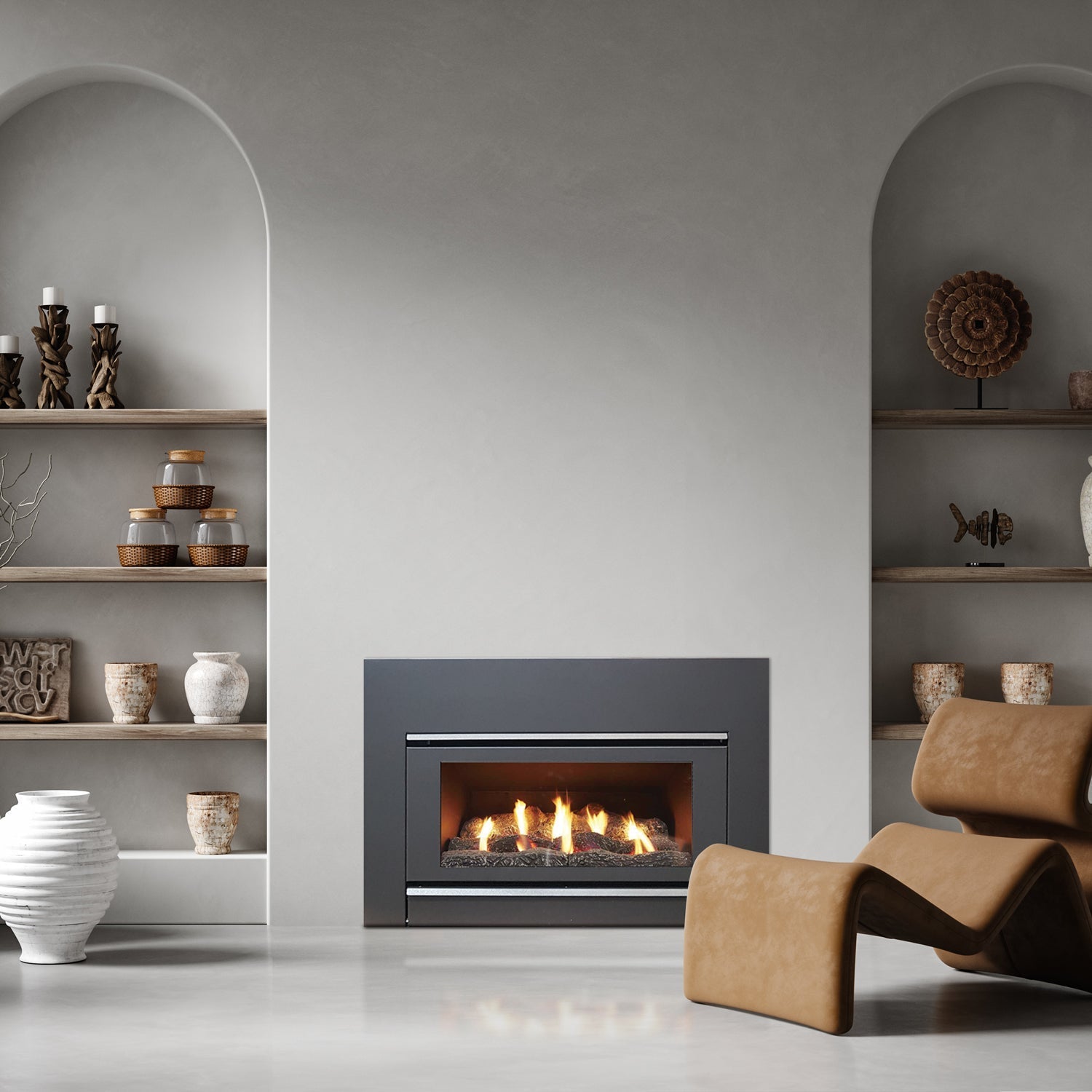
The first cold evening of autumn arrives, you reach for the remote, and nothing happens. Or the pilot light catches but the flames look odd. Or there's a smell you don't remember from last year.
Most gas fireplace problems that show up in winter are avoidable. A quick check before the season starts - 15 to 20 minutes at most - can save you a cold night and an emergency service call. Here's what to look at and when to call in a professional.
When should you check your gas fireplace before winter?
The best time is late March to mid-April for most of southern Australia. Melbourne's autumn weather can swing from 25 degrees to single digits in a week, and by the time you feel that first real chill, so does everyone else. Service technicians start booking out from May, and installation enquiries spike around the same time.
Whether your gas fireplace has been sitting unused since September or you ran it a few times through autumn, a pre-season check catches small issues before they become mid-winter emergencies.
What can you check yourself?
You don't need tools or technical knowledge for these. Just a few minutes and a careful eye.
- Glass panel. Look for cracks, chips, or heavy black staining. Some light carbon film on the inside of the glass is normal - it builds up gradually with use. But thick, dark deposits that block your view of the flames can signal incomplete combustion. Clean the glass with a fireplace-specific glass cleaner, not a standard household spray. Regular glass cleaners can leave chemical residue that causes odours or damage when the fireplace heats up.
- Pilot light. If your model has a standing pilot, check that it ignites smoothly. The pilot flame should be mostly blue with a small yellow tip. A flame that's mostly yellow or orange, or one that flickers and won't hold steady, usually means the pilot assembly needs cleaning or the gas-to-air mix is off. That's a job for a technician, but knowing what to look for helps you spot it early.
- Flue and external vent. Check where the flue exits your home for leaves, cobwebs, dust buildup, or bird nests. Blocked vents affect combustion and can create safety issues. If you can see the vent terminal from outside, a quick visual check is all you need.
- Remote control and wall switch. Flat batteries in the remote are the single most common reason people think their gas fireplace is broken. Replace them before the season starts and keep spares on hand. If your unit has a battery backup system for power outages, test that too.
- Unusual sounds on startup. Turn the fireplace on and listen. A soft click and gentle whoosh of ignition is normal. Banging, popping, whistling, or a delayed ignition - where there's a pause and then a loud burst of flame - means something needs attention.
- Clearances around the unit. Check that nothing has been placed too close over the warmer months. Books, cushions, blankets, and furniture should be at least a metre from the fireplace. Items leaning against or sitting on top of the unit should be removed before you turn it on.
- Smell on first ignition. A brief dusty or warm smell on the very first use of the season is normal. Months of sitting idle means fine dust settles on internal surfaces, and it burns off within 10 to 15 minutes. A persistent gas smell or sharp chemical odour is not normal. Turn the fireplace off immediately and contact a licensed gasfitter.

What needs a professional?
The checklist above covers what you can safely inspect at home. But gas fireplaces also need internal work that only a licensed technician should handle.
A professional service typically includes cleaning the burner and pilot assembly, testing gas pressure, inspecting internal seals and gaskets, checking the flue system for leaks, and testing for carbon monoxide. These aren't things you can see or assess from the outside, which is why annual servicing is recommended even when everything seems to be working well.
Book a professional service if you notice any of the following:
- A persistent gas smell near the unit
- Soot buildup inside the firebox or on the glass that returns quickly after cleaning
- Flames that are uneven, unusually blue throughout, or behaving differently than normal
- A pilot light that won't stay lit after multiple attempts
- Any signs of discolouration, peeling paint, or heat damage on the exterior casing
The goal isn't to scare anyone into booking a call. Gas fireplaces are genuinely low-maintenance compared to wood heaters. But they're not zero-maintenance, and an annual service keeps them running safely and efficiently for years.
Does it matter if I skipped last year's service?
Missing a single year isn't a disaster. Most gas fireplaces will continue working fine for a while without professional attention. But once you're past two years without a service, the risk of small issues compounding goes up. Seals dry out, dust accumulates in places you can't reach, and pilot assemblies can start to underperform.
If it's been more than two years since your last professional service, book one before you start using the fireplace this winter. It's a straightforward appointment and far cheaper than an emergency repair in July.
How do you get the most out of your gas fireplace this winter?
A few simple habits make a noticeable difference to comfort and efficiency.
Run the fireplace for 15 to 20 minutes on the first use of the season. This burns off accumulated dust and lets you confirm everything is working properly before you rely on it for a cold evening.
Use your gas fireplace for zone heating - warming the room you're actually in rather than heating the whole house with a ducted system. A well-sized gas fireplace can comfortably heat a living area while using less energy than running a central system across empty rooms.
Keep the glass clean throughout winter. Radiant heat passes through clean glass far more effectively than through a panel covered in carbon film. A quick wipe every few weeks keeps the heat output and the visual appeal where they should be.
If you're not sure whether your current fireplace is the right size for your space, that's worth checking too. An undersized unit will struggle to warm a large room, and an oversized one can make the space uncomfortable. Illusion Fires' range includes gas log fires and gas fireplaces suited to everything from compact living rooms to large open-plan areas - and the team at any of their showrooms can walk you through what works for your layout.
Frequently asked questions
How often should a gas fireplace be serviced?
Once a year is the industry recommendation for a full professional service. The RACV recommends at least every two years as a minimum for all gas heating appliances. If your fireplace gets heavy daily use through winter, annual servicing is the safer choice.
Can I service my gas fireplace myself?
You can handle the visual checks and cleaning in this article - glass, remote batteries, vent clearance, and clearances around the unit. But internal work on gas components, burners, and seals must be done by a licensed gasfitter. Working on gas appliances without a licence is both unsafe and illegal in Australia.
Why does my gas fireplace smell when I first turn it on?
A light dusty or warm smell on the first use of the season is completely normal. Dust settles on internal surfaces while the unit sits idle, and it burns off within 10 to 15 minutes. If the smell is sharp, chemical, or smells like gas, turn the fireplace off and call a technician.
What should I do if my gas fireplace won't ignite?
Start with the basics: check that the gas supply is on, replace the remote batteries, and make sure the unit is switched on at the wall. If the pilot light won't catch after a few attempts, or catches but won't stay lit, contact a service technician. Don't keep trying repeatedly - if there's an underlying issue, you want a professional to diagnose it.
Is it safe to leave a gas fireplace on overnight?
Most modern gas fireplaces are designed with safety controls including oxygen depletion sensors and automatic shut-off systems. However, manufacturers generally recommend turning the fireplace off before going to sleep. Check your owner's manual for specific guidance on your model.
If anything on this checklist flagged a concern, or if it's been a while since your last service, get in touch with the team at Illusion Fires. With showrooms in Dandenong, Epping, Geelong, Ballarat, Adelaide, Perth, Sydney, and Newcastle, there's a team nearby who can help you get sorted before winter.


Leave a comment
This site is protected by hCaptcha and the hCaptcha Privacy Policy and Terms of Service apply.