
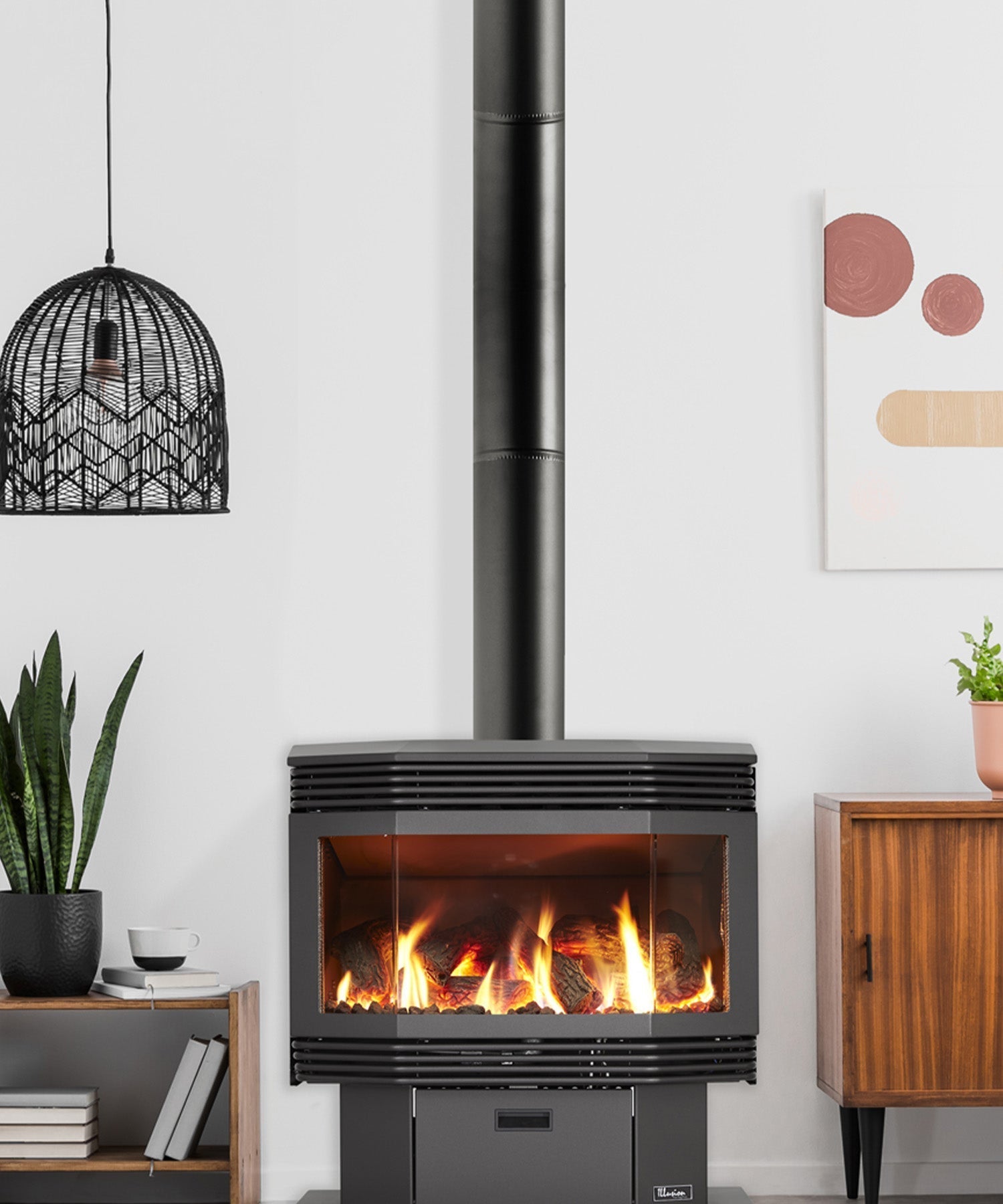
The freestanding gas log fireplace goes in, the installer leaves, and the room suddenly looks different. The old sofa position feels wrong. The TV wall is fighting for attention. The rug that used to sit neatly in the middle of the room now looks as if it belongs somewhere else.
That is normal. A freestanding gas log fire changes the architecture of a living room. It sits forward of the wall, the flue draws the eye upward, and the flame becomes the point the room wants to gather around. The best living rooms accept that shift early.
Start with the freestanding gas log fireplace as the focal point
A freestanding gas log fireplace works best when the room commits to it as the visual anchor. The firebox, flame pattern and flue carry more visual weight than an occasional chair, console table or sideboard.
| Layout rule | Practical target | Why it matters |
|---|---|---|
| Viewing arc | Keep most seats within a 60 to 90 degree arc from the flame | The fire remains visible without forcing every chair into a theatre-style row |
| Main sofa distance | Usually 2 to 3 m from the fireplace | Gives visual presence, warmth and enough circulation space |
| Traffic path | Keep walkways clear beside or behind the main seating zone | Stops the fireplace area becoming a squeeze point |
| TV hierarchy | Decide whether the TV or fireplace leads the room | Two competing focal points make the room feel unresolved |
The weakest layout is the one where every piece of furniture faces the TV and the fireplace sits to the side. That arrangement makes the freestanding unit look like an appliance parked in the corner. The better move is to let the fire set the room geometry, then decide where the screen can sit without taking over.
The style of the unit matters too. A Luminar StandAlone can suit a sharper contemporary room with clean lines and a stronger vertical flue. A Millenium Freestanding can sit more comfortably in a transitional or classic room. An Esprit FS-2000 has a more compact presence, which can suit smaller rooms or less formal spaces. The range matters because the base, height and visual weight of the unit affect the rest of the room.
The wall behind, the floor below and the space above
A freestanding gas log fire has three styling zones: the wall behind it, the floor below it and the flue space above it. Each zone needs a deliberate decision before furniture and colour choices make sense.
| Zone | Design decision | Best publication note |
|---|---|---|
| Wall behind | Material, tone and heat-safe construction | Check model-specific clearance and heat-shield requirements before publishing |
| Floor below | Hearth or base material and visual footprint | Do not quote a universal hearth dimension for gas models |
| Space above | Exposed flue, boxed chase or softened flue finish | Treat the flue as part of the design, not a late technical detail |
The wall behind
The wall behind the fireplace should either support the fireplace visually or become part of the fireplace setting. A plain white wall can work, but only when the whole room is deliberately pale and restrained.
- Rendered plaster: works for warm minimalism, organic modern rooms and soft contemporary interiors.
- Natural stone or brick: gives weight and texture, especially when the room has timber floors or leather seating.
- Dark feature paint: suits black-trimmed units and rooms with a stronger evening feel.
- Vertical battens or panelling: can work visually, but combustible material needs model-specific clearance or approved shielding.
Because Illusion manufactures in Melbourne, model-specific clearance questions can be checked against the people who built the unit. That matters when the wall finish is timber, panelling, veneer, plasterboard over framing or any other material affected by heat.
The floor below
The hearth is a visual platform before it is a styling accessory. It gives the freestanding fireplace a base, protects the floor where required and stops the unit looking as if it has been placed directly on the floor by accident.
Concrete, bluestone, granite, porcelain tile and honed stone are the strongest choices. They have weight, texture and enough visual depth to sit under a flame without competing with it.
The safe rule is to size and specify the hearth from the product manual. Gas units have different requirements from wood heaters, and some installations need a base for visual balance rather than the same hearth logic used for a solid-fuel appliance.
The space above
The flue is part of the design. Leaving it exposed in matt black gives the room a stronger architectural line. It suits organic modern, industrial and contemporary heritage rooms, especially when the fireplace is meant to read as a freestanding object.
A boxed chimney chase changes the mood. It makes the freestanding unit feel more built-in and can suit a room where the wall needs more structure. Painting the flue to match the wall softens the effect, which can suit lighter interiors where black trim would dominate.
The key decision is simple: show the flue, frame it or soften it. Avoid half-decisions, such as a visible flue in a colour that fights the wall or a chase that feels too shallow for the unit below.
Furniture, palette and material around the fireplace
Furniture should form a room around the fireplace, rather than filling the remaining floor space. Once the fire is in place, the seating, rug, palette and lighting should all point back to that anchor.
| Room decision | Strong choice | Why it works |
|---|---|---|
| Main seating | Two sofas facing each other with the fireplace at one short end | Creates the strongest fireplace-led room and keeps conversation natural |
| Small-room seating | L-shaped sofa facing partly toward the fire | Saves space while keeping the flame visible |
| Rug size | Front legs of major furniture on the rug | Makes the seating zone read as one complete area |
| Palette | Bone, oat, putty, burnt clay, sage, charcoal or warm white | Works with flame, black trim and natural materials |
| Lighting | Warm 2700K lamps and dimmers | Lets the fire remain the softest light source in the room |
A two-sofa layout is the strongest arrangement for a fireplace-led living room. Put the freestanding fireplace at the short end of the rectangle, then let the sofas create the long sides. This makes the flame visible from both seating runs and leaves room for a rug to hold the whole zone together.
An L-shaped sofa suits smaller rooms, especially where a walkway or doorway limits the floor plan. The risk is that one seat gets the full fireplace view and the rest of the sofa looks away. Angle an armchair or side chair back toward the fire to restore balance.
The strongest palettes for gas log fireplace styling in 2026 are warm and grounded. Australian design publications such as Belle, Vogue Living Australia and Houzz Australia have all moved heavily toward warmer neutrals, soft earth tones and natural material palettes. For a fireplace room, that direction makes sense because the flame already adds orange, red and black to the space.
- Warm minimalism: bone, oat, putty, pale oak and soft linen.
- Organic modern: clay, sage, charcoal, limestone, walnut and textured wool.
- Contemporary heritage: deep warm white, black trim, timber furniture and a stone hearth.
- Modern coastal: warm white, sand, light oak, linen and a restrained black fireplace line.
Materials should have texture. Linen, wool, leather, oak, walnut, terracotta tile and honed stone all respond well to firelight. High-shine coffee tables, glossy tiles and mirror-heavy finishes tend to bounce the flame in a way that feels harder and less settled.
Lighting needs the same restraint. A gas log fire already gives the room a low, moving light source. Use warm 2700K lamps, wall lights and dimmers. Avoid ceiling spotlights aimed directly at the firebox, because they flatten the flame and make the room feel showroom-bright at the wrong moment.
The TV question
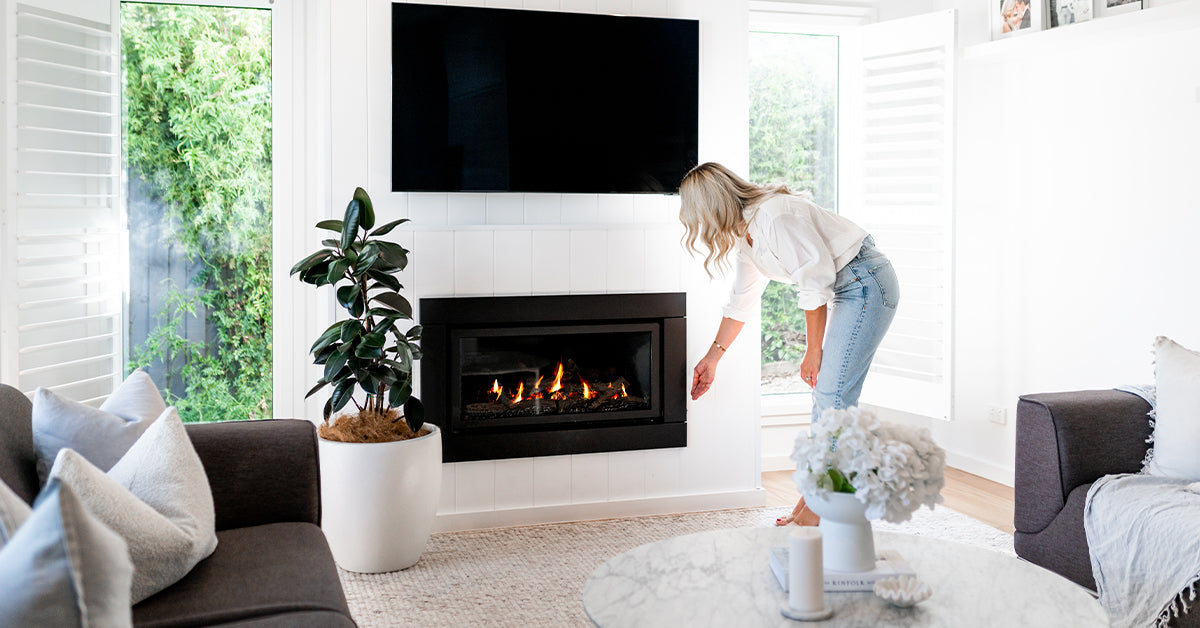
A TV can share a living room with a freestanding gas log fireplace, but the layout needs a clear hierarchy. The three workable choices are TV above the fireplace, TV on a perpendicular wall or TV in a separate room.
| TV option | When it works | Main risk to check |
|---|---|---|
| Above the fireplace | Small rooms with one strong feature wall | Heat clearance, screen height and TV warranty requirements |
| Perpendicular wall | Larger rooms with space for two seating axes | The room can feel split if furniture does not bridge both focal points |
| Separate room | Larger homes with a second living area | The main room becomes calmer, but this needs the floor plan to support it |
A TV above the fireplace suits smaller rooms with one strong feature wall. The common mounting rule is to keep the bottom of the screen around 1.2 m from the floor, or as close as possible to seated eye level. Heat clearance is the constraint. The product manual and TV manufacturer specifications should decide the final bracket height, not a styling preference.
A TV on a perpendicular wall works better in larger rooms. It creates two focal points: one for watching and one for sitting by the fire. This layout needs more furniture skill because the seating has to serve both directions without turning into a waiting room.
A separate TV room is the cleanest design answer. Many Australian homes lack the floor plan for it. When there is space, the main living room becomes calmer. The fireplace can lead the room without having to compete with a black screen.
If the TV and fireplace must sit together, do not pretend they have equal weight. One should lead. In a room built around flame, texture and winter use, the fireplace usually deserves that role.
Styling that lasts and styling that dates
Good fireplace styling ages well because it is based on proportion, natural materials and restraint. Dated styling usually comes from forcing a trend onto the wall because it looks strong in a photo.
| Lasts | Dates faster |
|---|---|
| Natural hearth materials such as stone, concrete, tile and brick | Strong-trend wallpaper directly behind the fireplace |
| Warm white, charcoal, clay, oat and timber palettes | All-white Hamptons styling without warmth or texture |
| Layered lighting from lamps, wall lights and dimmers | Ceiling spotlights aimed straight at the firebox |
| Slipcovered linen sofas, leather armchairs and timber frames | Oversized live-edge timber mantels that overpower the firebox |
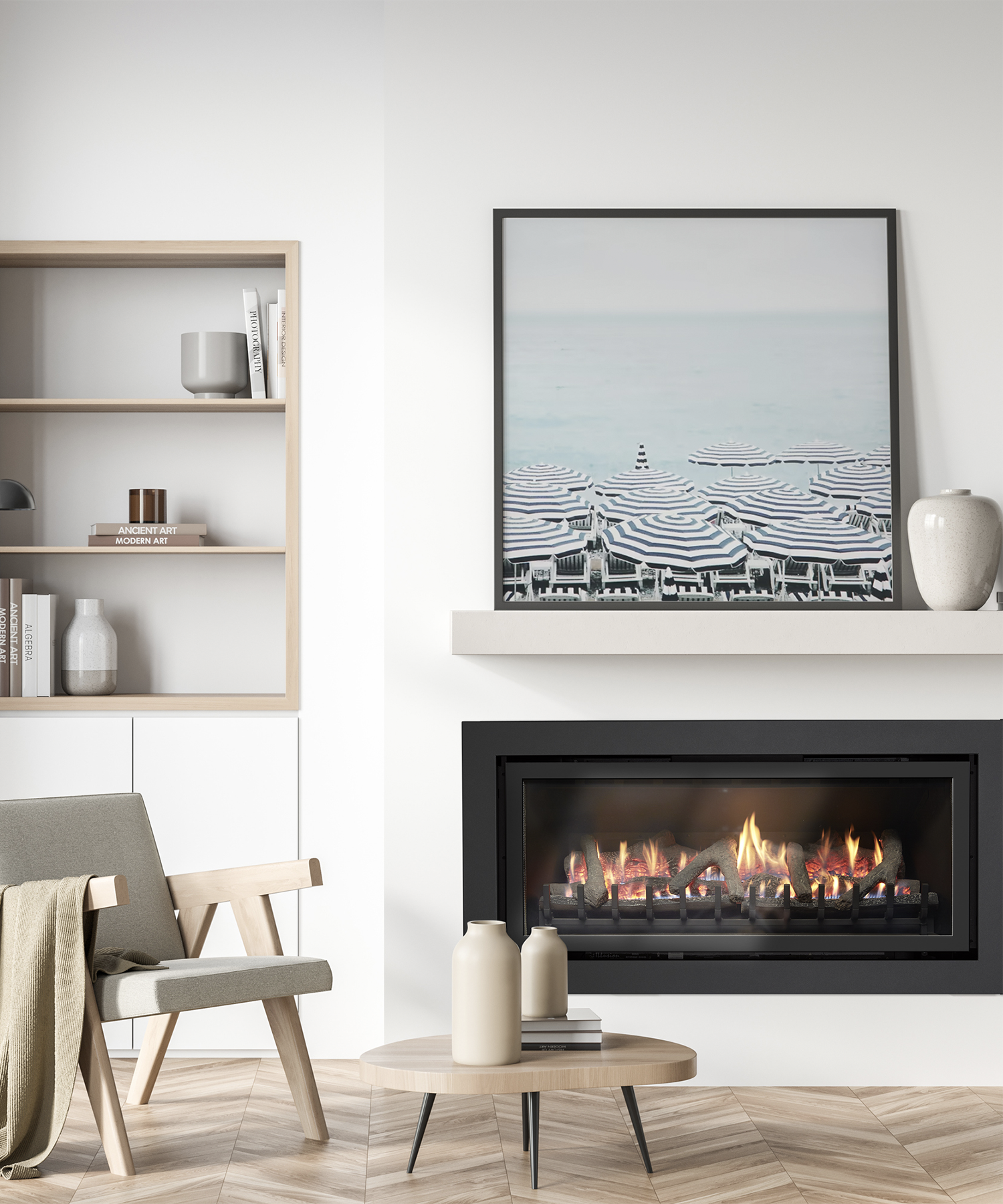
| Artwork placed beside the fireplace zone | Objects crowded around the flame or flue |
The safest approach is edited rather than plain. Let the fire, hearth, wall material and furniture proportions do the work. Add seasonal texture through cushions, throws, flowers and side tables rather than building the whole room around a trend that may have a short life.
When to bring a designer in
Most living rooms do not need a full interior design process. A homeowner with a clear wall, a suitable hearth position and a simple furniture plan can often make the room work with careful product selection and a few well-chosen materials.
A designer becomes useful when the fireplace changes the room structure. Heritage homes, complex open-plan spaces, split-level rooms and renovations involving a rebuilt wall all need stronger planning because one decision affects the next.
Bring a designer in early if any of these apply:
- The fireplace wall is being rebuilt, extended or clad.
- The flue will run through a visible part of the room.
- The room has more than one focal point, such as a TV, view or kitchen island.
- The home has heritage details that need to be protected.
- The hearth, flooring and wall finish all need to be chosen together.
The practical reason is timing. A freestanding gas log fire can be selected late in a renovation, but the wall behind it, the floor below it and the flue path often need to be settled earlier.
What to do next
A freestanding gas log fireplace can sit in the same room for 15 to 20 years. The wall behind it, the hearth below it and the flue treatment above it can last even longer because changing those decisions later often means rebuilding part of the room.
Bring room measurements, photos of the wall and any floor plans into an Illusion showroom before locking in the final layout. Visit Dandenong, Epping, Geelong, Ballarat, Adelaide, Perth, Sydney or Newcastle to see how each freestanding gas log fire reads in a real room setting before the wall, hearth and furniture plan are fixed.

Leave a comment
This site is protected by hCaptcha and the hCaptcha Privacy Policy and Terms of Service apply.