
You’ve decided electric is the right fit for your home. Now comes the harder part: picking the right one.
Walk into a showroom or scroll any retailer’s range and you’ll find freestanding cabinets, slim wall-mounted panels, deep recessed inserts, and full mantel suites with timber or stone surrounds. Some are designed as feature pieces for a media wall. Others slot straight into the cavity of an old fireplace. Prices run from a few hundred dollars for a basic plug-in unit to several thousand for a premium centrepiece. The variety is great for choice, but it can also feel overwhelming.
What types of electric fireplaces are available?
Most electric fireplaces fall into one of four categories. Each suits a different kind of room, build, and budget.
Freestanding. A complete unit you stand on the floor, often styled like a traditional cabinet or a modern stove. No cavity, no mounting, no hardwiring on most models. Plug it in and you’re done. Good for renters, retrofits, and anyone who doesn’t want a build job.
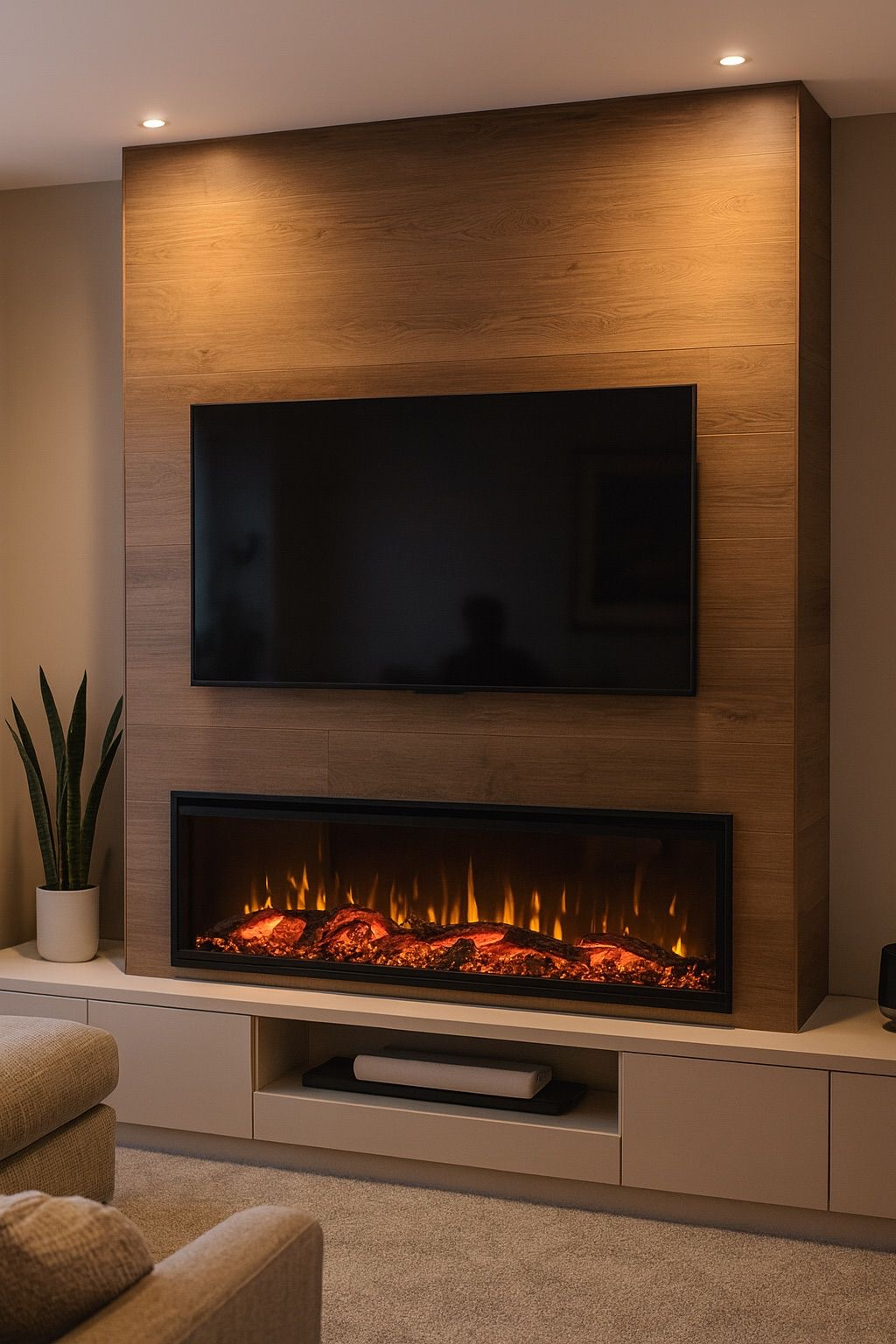
Insert (or inbuilt). Designed to slot into a wall cavity, an existing fireplace opening, or built-in joinery. The face sits flush with the wall and you get a clean, integrated look. Perfect if you’ve got a disused open fireplace and want to bring it back to life without the mess of gas or wood.
Wall-mounted. A slim panel that hangs on the wall like a TV. No floor footprint, very contemporary, ideal for small rooms and modern apartments where space is tight. Most plug into a standard power point, though some need to be hardwired depending on the model.
Mantel suites. A freestanding electric fireplace heater that comes packaged with a timber, stone, or moulded surround. Gives you the look of a traditional fireplace with the simplicity of plug-in installation. Popular in homes where the goal is a classic centrepiece, not a modern wall feature.
Here’s a quick side-by-side:
| Type | Best for | Installation | Typical price range |
|---|---|---|---|
| Freestanding | Renters, retrofits, flexible placement | Plug-in (no install) | $400 to $2,500 |
| Insert / inbuilt | Joinery, existing fireplaces, modern wall builds | Recessed; may need an electrician | $1,000 to $5,000+ |
| Wall-mounted | Small rooms, apartments, contemporary builds | Wall fixing; some models need hardwiring | $500 to $3,500 |
| Mantel suites | Classic feature pieces, period homes | Plug-in (no install) | $800 to $4,000 |

Once you’ve narrowed down which format suits your space, our Velisse Aura electric range covers freestanding, insert, and wall-mounted options to compare side by side.
How much heat do you actually need?
Electric fireplaces are an effective heater, but they’re not designed to replace ducted heating in a four-bedroom home. Most models top out around 2 kW, with smaller units sitting at 1.5 kW. That’s enough to warm a small-to-medium room comfortably, but not enough to push warm air through an entire open-plan house.
A 2 kW electric fireplace heater will warm a room of roughly 20 to 25 square metres, depending on insulation and ceiling height. As a rough guide:
- Bedroom or home office (10 to 15 sqm): a 1.5 kW model is plenty
- Standard living room (20 to 25 sqm): a 2 kW model is the right size
- Larger living areas or open-plan zones (over 30 sqm): an electric fireplace can still work well, but use it as zone heating for the area you spend the most time in, not as a whole-room solution
The good news is that most electric fireplaces let you run the flame effect with the heater turned off. That means you can enjoy the look of a fire on a mild evening or in the middle of summer without warming the room.
Which features matter, and which are gimmicks?
The feature list on a modern electric fireplace can be long. Some of those features make a real difference. Others sound impressive in a showroom but you’ll never touch them after the first week.
Worth paying for:
- Quality flame effect. The single biggest difference between a $300 unit and a quality model. Premium electric fireplaces use 3D flame technology, glowing log or ember beds, and adjustable flame colours. Cheap ones use a basic LED strip behind a printed log set, which looks fine in photos and obviously fake in person.
- Thermostat control. Lets the heater cycle on and off to hold a target room temperature. More comfortable than running the heater flat-out and then opening a window.
- Independent flame and heat controls. Lets you run the flames without the heater. Genuinely useful in summer or in shoulder seasons when you want the look without the warmth.
- Remote control. A small thing, but you’ll use it every day. Some models also include app control.
Nice if it’s there, not worth chasing:
- Crackling sound effects. Some people love them, others find them distracting after a week.
- Multi-colour flame settings. Fun to play with, but most owners settle on one warm colour and leave it there.
- Smart home integration. Worthwhile if you’re already running a connected home, less so otherwise.
Our Velisse Aura electric collection includes multi-colour flame effects, glowing logs, ambient lighting, and crackling sound across the range, with adjustable heating to suit different room sizes.
Where is it going to live?

The physical space you’re putting it in often dictates the type before any other consideration.
Living room. Most owners pick either a built-in insert (clean, integrated look) or a freestanding mantel suite (traditional feature piece). The choice usually comes down to whether you want the fireplace to disappear into the wall or stand out as the focal point.
Bedroom. A wall-mounted unit is hard to beat here. Slim, quiet, no floor footprint, and easy to run on flame-only mode for late-night ambience without overheating the room.
Apartments, townhouses, and rentals. This is where electric really shines. No flue, no gas connection, no chimney. If you live in a Melbourne apartment without a gas line, or a Sydney terrace where adding a flue would mean chasing through three storeys of brick, electric is often the only fireplace option that makes sense. Freestanding and mantel suites are the obvious pick for renters because they don’t require any installation work and they come with you when you move.
Open-plan rooms. Position the fireplace where you actually spend your evenings, not in the middle of the largest wall. An electric fireplace works as zone heating, so it should sit close to the seating area rather than try to heat the whole space.
One advantage worth noting: because there’s no flue or gas line, you have far more flexibility on placement than you would with gas or wood. Internal walls, corners, recesses, and feature walls are all on the table.
What about style and finish?
Electric fireplaces have moved a long way from the dated faux-brick units of the 90s. Modern options break into two broad styles.
Modern minimalist. Clean lines, dark frames, glass front, subtle log or pebble fuel beds. Pairs well with contemporary builds, neutral palettes, and media-wall installations.
Traditional mantelpiece. Carved or moulded surrounds in timber or cast finishes, designed to look like a classic open fireplace. Suits older homes, period renovations, and rooms with more decorative detail.
The hardest thing to judge from photos is the flame effect itself. A unit that looks great in product images can look obviously synthetic in person, and vice versa. If you’re spending real money, see it running before you commit. For more on integrating a fireplace into your room styling, see our guide on creating a cosy modern living space.
Frequently asked questions
Do electric fireplaces actually heat a room?
Yes, within their limits. Most models use 1.5 to 2 kW and comfortably warm a small-to-medium room of around 20 to 25 square metres. They’re a strong primary heater for one zone or a supplementary heater for larger spaces, but not a replacement for ducted heating in a whole house.
Can I install an electric fireplace myself?
Many freestanding, mantel-suite, and wall-mounted models plug into a standard 10-amp power point and need no installation. Recessed inserts, hardwired wall-mounted units, and any model fitted into joinery should be installed by a licensed electrician.
What’s the difference between an electric fireplace insert and a freestanding one?
An insert is built into a wall cavity, joinery, or existing fireplace opening for a flush, integrated look. A freestanding unit stands on the floor as a complete piece. Inserts give you a cleaner finish; freestanding units are simpler to install and easy to move.
Are electric fireplace mantels worth it?
A mantel suite gives you the traditional look of a built-in fireplace without any of the build work. If you want a classic feature in a room that doesn’t have an existing fireplace, an electric fireplace mantel is hard to beat for the look-to-effort ratio.
How long do electric fireplaces last?
A quality electric fireplace typically lasts 10 to 20 years, depending on use and care. The LED flame effect components can run for tens of thousands of hours, often longer than the heater itself.
Ready to see them in person?
The flame effect, finish quality, and how a unit actually feels in a room are hard to judge online. Visit one of our showrooms in Dandenong, Epping, Geelong, Ballarat, Adelaide, Perth, Sydney, or Newcastle to see the Velisse Aura electric range running alongside our gas log fire collections. Our team can match a unit to your room size, layout, and style, so the one that arrives at home is the right fit from day one.

Leave a comment
This site is protected by hCaptcha and the hCaptcha Privacy Policy and Terms of Service apply.